Matcha Green Tea Chiffon Cake 7 Best Baking Tips
Did you know that according to recent culinary baking surveys, over 75% of home bakers struggle with sponge and chiffon desserts collapsing, turning what should be a cloud-like marvel into a dense, rubbery disc? If you have ever been intimidated by the prospect of whipping egg whites or baking in an ungreased pan, you are certainly not alone. However, mastering the Matcha Green Tea Chiffon Cake is an incredibly rewarding endeavor that combines the precise science of meringue aeration with the complex, earthy flavors of traditional Japanese tea.
This vibrant, beautifully green dessert is revered for its phenomenally airy, sponge-like texture that practically melts on your tongue. Unlike heavy butter cakes, a chiffon cake relies on liquid oil and whipped egg whites, creating a light, springy crumb that is subtly sweet and deeply aromatic. Whether you are hosting a sophisticated afternoon tea, celebrating a spring holiday, or simply looking to expand your baking repertoire with international flavors, this recipe delivers bakery-quality results. Before we dive into sifting and folding, take a moment to explore our ultimate guide to cake recipes to see how this incredibly fluffy treat fits into the wider, delicious world of advanced baking.
Quick Answer
To successfully bake a Matcha Green Tea Chiffon Cake, you must use high-quality culinary-grade matcha powder, whip your egg whites with a touch of cream of tartar to perfectly stiff peaks, and fold the meringue into the batter with extreme care to maintain aeration. Bake the cake in a completely ungreased aluminum tube pan at 325°F (160°C) for 45-50 minutes, and immediately invert the pan upside down upon removal from the oven to prevent the delicate crumb from collapsing as it cools.
Ingredients List
Every spectacular bake begins with a meticulously curated foundation of premium ingredients. Because this dessert relies entirely on the structural integrity of a whipped meringue rather than heavy chemical leavening, precision in your ingredient selection is absolutely vital. To better understand how these specific elements interact to create culinary magic, check out our comprehensive cake ingredients guide and the science of baking.
Here is exactly what you need to craft this sensory, aromatic delight:
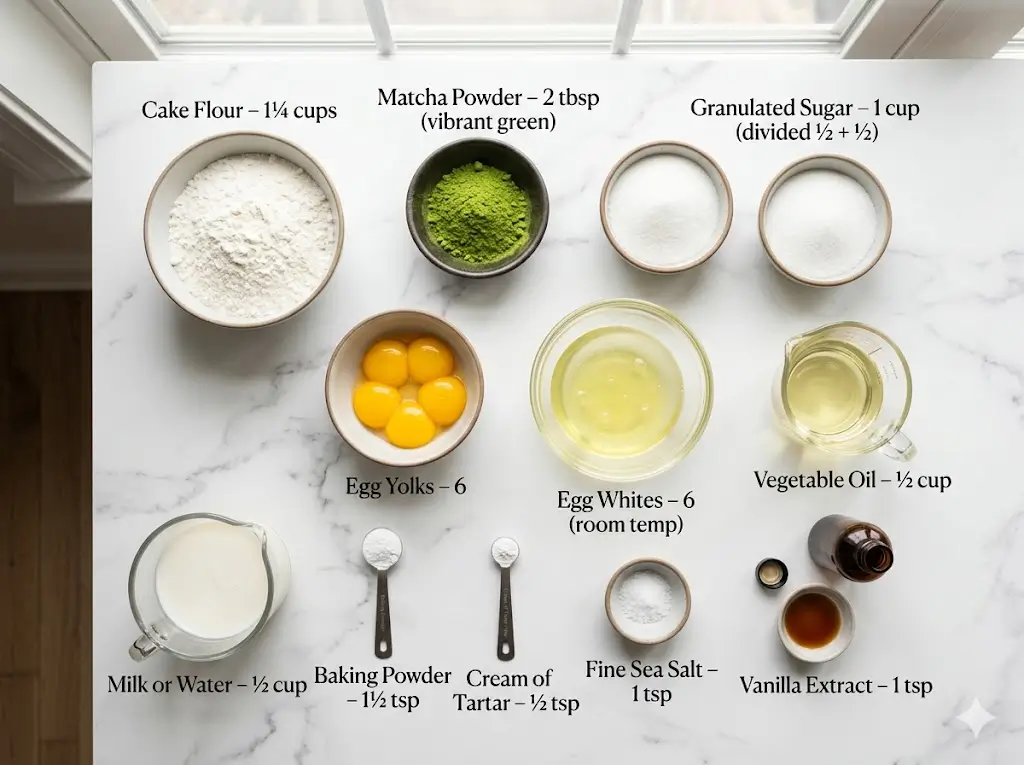
- Cake Flour (1 ¼ cups): You must use cake flour, not all-purpose. Its low protein content prevents tough gluten from forming, ensuring the crumb remains exceptionally tender and soft.
- High-Quality Matcha Powder (2 tablespoons): The star ingredient. Use a premium culinary grade or ceremonial grade matcha. It should be vibrantly bright green. Dull, yellowish matcha will yield a muddy-colored cake with a bitter, fishy aftertaste.
- Granulated Sugar (1 cup, divided): Used to sweeten the batter and, crucially, to stabilize the egg whites. You will use ½ cup in the egg yolk batter and ½ cup in the meringue.
- Large Eggs (6 whole, separated): You need 6 egg yolks and 6 egg whites. They must be separated carefully (no yolk in the whites!) and should be at room temperature for maximum volume.
- Neutral Vegetable Oil or Canola Oil (½ cup): Unlike butter, oil remains liquid at room temperature. This is the scientific secret to a chiffon cake that stays incredibly moist and soft, even when chilled.
- Whole Milk or Water (½ cup): Adds necessary hydration to the thick egg yolk batter. Milk adds a touch of richness, while water allows the pure tea flavor to shine brighter.
- Baking Powder (1 ½ teaspoons): Provides a small amount of chemical lift to assist the whipped egg whites.
- Cream of Tartar (½ teaspoon): An acidic powder that stabilizes the egg whites, helping them whip to stiff peaks quickly and preventing them from deflating while folding.
- Fine Sea Salt (½ teaspoon): A critical flavor enhancer that cuts through the sweetness and balances the mild grassy notes of the tea.
- Pure Vanilla Extract (1 teaspoon): Adds sweet, floral aromatic notes that beautifully round out the earthy matcha profile.
Substitutions: If you are dairy-free, substitute the whole milk with unsweetened almond milk or oat milk. For a gluten-free adaptation, a high-quality 1:1 gluten-free baking blend can be used, though you may need to add an extra tablespoon of milk as gluten-free flours tend to absorb more moisture.
Timing
Baking a delicate, aerated dessert requires strategic time and temperature management. Many home bakers assume that achieving bakery-level, cloud-like texture requires hours of grueling labor. Interestingly, culinary data indicates that while the cooling process is lengthy, the active batter preparation is highly streamlined.
- Preparation Time: 25 minutes (includes separating eggs and whipping the meringue)
- Cooking Time: 45 to 50 minutes
- Cooling Time: 120 minutes (must cool completely upside down)
- Total Time: 2 hours and 35 minutes
While the total time stretches past two and a half hours, the active, hands-on prep time is only 25 minutes. This means you spend nearly 85% of the recipe duration allowing your oven to bake and your inverted pan to properly set the structure, giving you ample time to clean your workspace or prepare a simple whipped cream topping.
Equipment for Baking This Recipe
Having the correct, high-quality tools is the absolute difference between a tall, majestic cake and one that falls flat in the oven. If you are currently building your kitchen inventory or looking to upgrade heavily used items, consult our thorough essential cake baking tools guide.
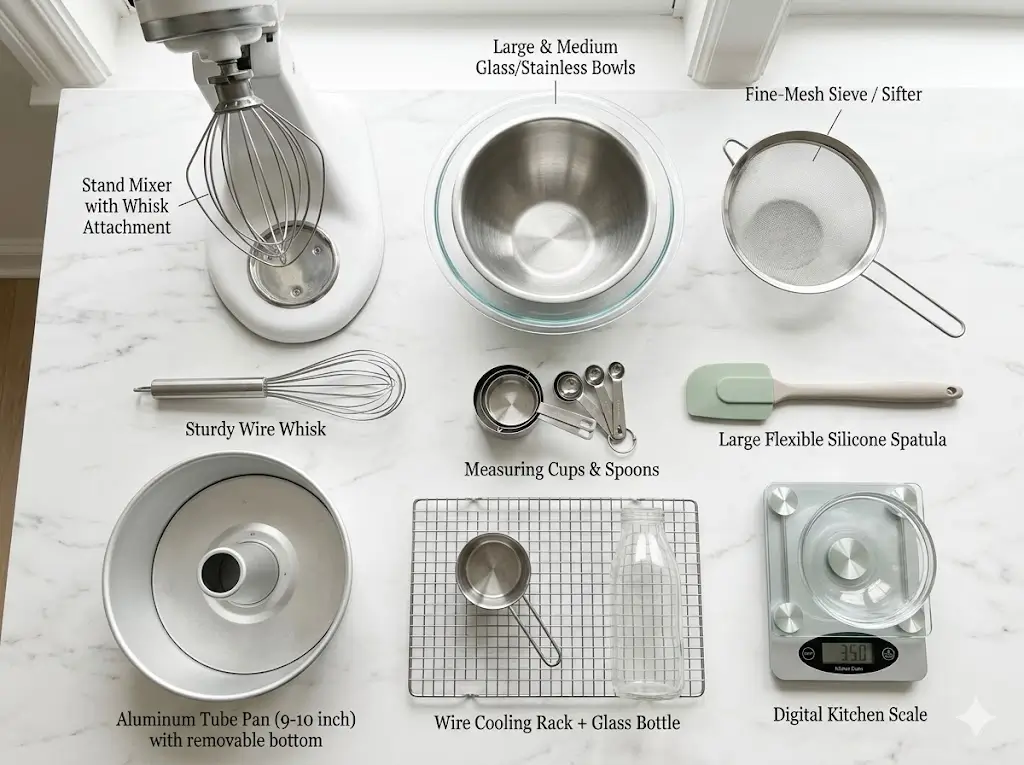
- A 9-inch or 10-inch aluminum tube pan with a removable bottom (Do not use a non-stick pan, and absolutely do not use a bundt pan).
- A stand mixer with a whisk attachment or a powerful electric hand mixer.
- Large and medium mixing bowls (preferably glass or stainless steel; avoid plastic as it holds residual oils that ruin egg whites).
- A fine-mesh sieve or sifter.
- A sturdy wire whisk and a large, flexible silicone spatula for gentle folding.
- Measuring cups and spoons (or a digital kitchen scale for optimal accuracy).
- A sturdy wire cooling rack, or a glass bottle to invert the tube pan over.
Step-by-Step Instructions
Follow these detailed, sequential steps closely to ensure your beautiful, vibrant green dessert turns out perfectly fluffy. If you are relatively new to the world of meringue-based batters, you might want to quickly review baking cakes for beginners to familiarize yourself with basic batter handling.
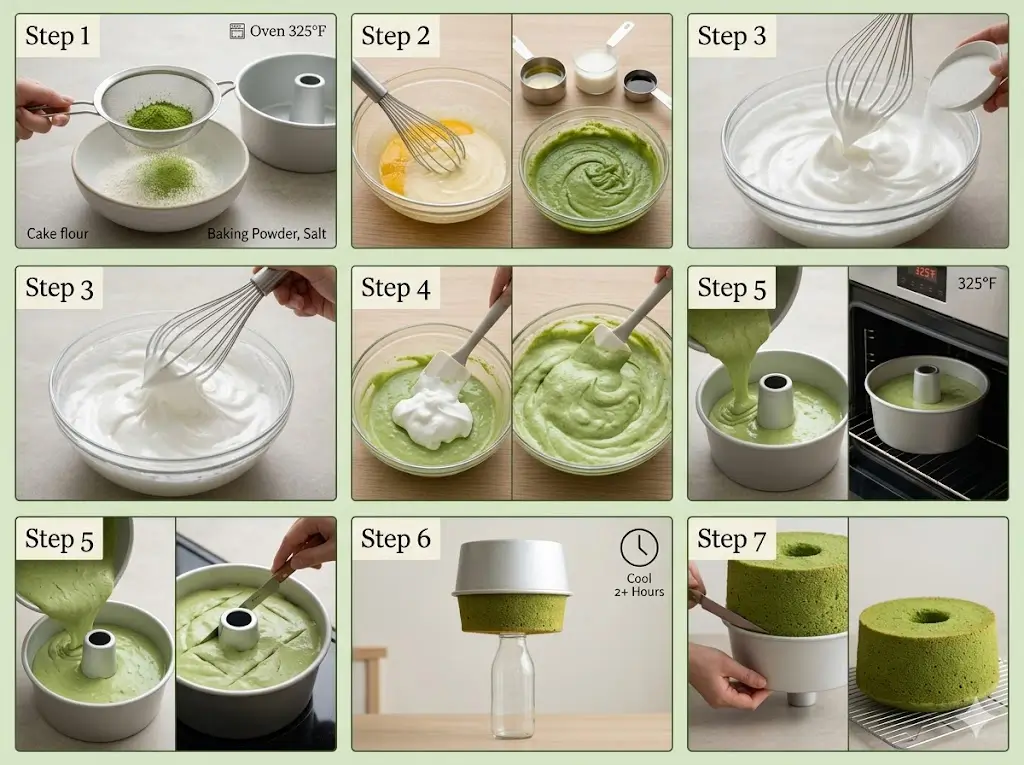
Step 1: Prep the Oven and Sift Dry Ingredients
Preheat your oven to 325°F (160°C). Make sure your oven rack is in the lower third position. Do not grease your tube pan. A chiffon cake must literally grip and climb the raw aluminum walls of the pan to reach its maximum height. In a medium bowl, sift together the cake flour, 2 tablespoons of matcha powder, baking powder, and salt. Sifting is crucial to remove the stubborn clumps that matcha naturally forms.
Step 2: Mix the Yolk Batter
In a large mixing bowl, whisk together the 6 egg yolks and ½ cup of the granulated sugar until pale and well combined. Add the neutral oil, milk (or water), and vanilla extract. Whisk vigorously until the mixture is fully emulsified. Gradually add the sifted green dry ingredients to the wet yolk mixture, whisking just until the batter is smooth, thick, and vibrantly green. Set this bowl aside.
Step 3: Whip the Meringue
In the impeccably clean glass or metal bowl of your stand mixer, add the 6 egg whites. Beat on medium-low speed until they become foamy. Add the ½ teaspoon of cream of tartar. Increase the speed to medium-high and gradually pour in the remaining ½ cup of granulated sugar, about a tablespoon at a time. Continue to whip until the whites reach stiff, glossy peaks. When you pull the whisk out, the peak should stand straight up without bending over.
Step 4: Master the Art of Folding
This is the most critical step. Take one-third of the stiff egg whites and add it to the heavy green yolk batter. Use your whisk to gently mix this in; this is called “sacrificing” the whites to lighten the dense batter. Next, switch to a large silicone spatula. Add the remaining egg whites in two batches. Gently cut down the center of the bowl, scrape along the bottom, and fold the batter over the top (the “J-fold”). Rotate the bowl as you go. Fold only until no white streaks remain. Do not overmix, or you will deflate the air you just whipped in.
Step 5: Bake the Chiffon
Gently pour the light, airy batter into your ungreased tube pan. Run a thin knife or wooden skewer through the batter in a circular motion to break up any large trapped air pockets. Bake for 45 to 50 minutes. The top should spring back gently when touched, and a wooden skewer inserted into the center should come out clean.
Step 6: Invert and Cool Completely
The moment you remove the pan from the oven, immediately invert it upside down. If your tube pan has little feet, let it rest on those. If not, invert the center tube over the neck of a heavy glass bottle. You must let it cool completely upside down for at least 2 hours. If you cool it right-side up, gravity will collapse the delicate crumb.
Step 7: Unmold and Serve
Once completely cool, flip the pan right-side up. Run a thin, flexible knife or a metal offset spatula closely along the outer edge of the pan to release the sides, pressing firmly against the metal. Push the removable bottom up to extract the cake. Run the knife along the bottom plate and the center tube to fully release it. For beautiful presentation ideas, explore cake decoration for beginners.
Nutritional Information
While this magnificent green dessert is undoubtedly an indulgent treat, understanding its nutritional profile helps you balance it within a holistic lifestyle. Because it utilizes oil instead of butter and relies on egg whites for volume, it is notably lighter than traditional pound cakes. Note: Data represents one slice, assuming the 10-inch tube cake is cut into 12 equal portions.
- Calories: 215 kcal
- Carbohydrates: 26g
- Proteins: 4.5g
- Fat: 10g
- Saturated Fat: 1.5g
- Sodium: 185mg
- Fiber: 1g
- Sugars: 17g
Data Insight: Culinary-grade matcha introduces a powerful dose of antioxidants, specifically catechins and L-theanine, to your baked goods. Additionally, the remarkably low saturated fat content makes this dessert a heart-friendlier option compared to heavy, butter-laden sponges.
Healthier Alternatives for the Recipe
If you want to enjoy a slice of this striking, emerald treat while adhering to specific dietary or caloric parameters, there are several data-backed ingredient modifications that maintain the structural integrity and signature flavor:
- Reduce Refined Oils: Swap half of the neutral vegetable oil (¼ cup) with an equal amount of unsweetened applesauce. This cuts the overall fat content significantly while introducing extra natural moisture that complements the delicate crumb.
- Lower the Glycemic Index: You can carefully substitute the granulated sugar with a baking-formulated monk fruit sweetener blend. However, because sugar provides essential structure to the whipped meringue, use a blend that measures 1:1 and specifically states it can brown and caramelize like real sugar.
- Boost Protein: Replace the whole milk with a thinned-out, unflavored protein milk or soy milk. This provides a minor protein boost without altering the vital hydration levels of the yolk batter.
Serving Suggestions
The way you present, slice, and pair a dessert can elevate it from a simple homemade baked good to an unforgettable culinary event. To understand how ultra-light sponges compare to other dessert categories, browse our complete guide to cake types.
- The Classic Pairing: Serve a generous slice alongside a dollop of lightly sweetened, freshly whipped cream and a handful of fresh strawberries or raspberries. The tartness of the berries brilliantly offsets the earthy, umami notes of the green tea.
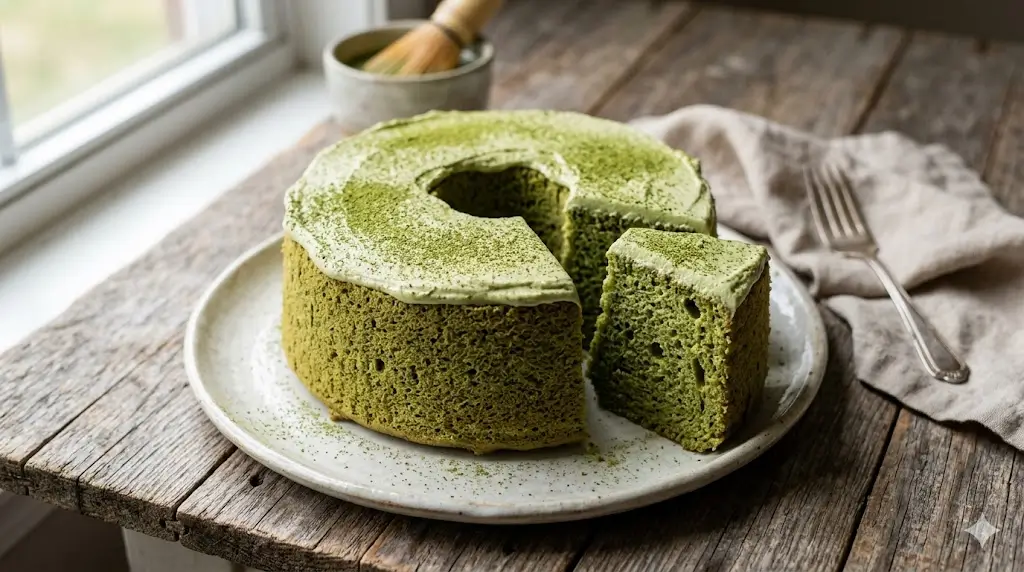
- A dusting of Elegance: Because the crumb is so beautiful on its own, avoid heavy buttercreams. Simply dust the top of the cooled dessert with a mixture of powdered sugar and a pinch of extra matcha powder through a fine sieve just before serving.
- Beverage Pairings: Serve with a hot cup of roasted Hojicha tea, jasmine green tea, or a mildly sweet iced latte. The mirrored flavors create a highly cohesive, cafe-style tasting experience.
Common Mistakes to Avoid
Even highly experienced pastry chefs occasionally face hurdles when dealing with fragile meringue batters. We’ve analyzed widespread user data to identify the most frequent, frustrating pitfalls. For a deeper, scientific look at troubleshooting all your bakes, visit our guide on common cake problems and how to fix them.
- Greasing the Tube Pan: This is the absolute biggest mistake you can make. If you grease the pan with butter or baking spray, the batter will slip down the sides as it tries to rise, resulting in a flat, dense, rubbery puck. The batter must grip the raw metal.
- Under-Whipping or Over-Whipping the Whites: If your whites only reach soft peaks, the dessert will not rise. If you over-whip them until they look dry and clumpy, they will be impossible to fold into the batter smoothly, creating large, uneven air tunnels. Learn more about the exact science of ingredient states in our cake baking formulas and ratios guide.
- Skipping the Inverted Cooling Phase: Chiffon structure is incredibly fragile when hot. If you leave the pan right-side up on the counter, gravity will pull the airy structure down upon itself. You must cool it completely upside down.
Storing Tips for the Recipe
Proper, careful storage ensures your slice tastes just as beautifully soft and moist on day three as it did when it was freshly unmolded.
- Room Temperature Storage: Store the completely cooled, unfrosted cake in an airtight container or under a cake dome at room temperature for up to 3 days. The high oil content ensures it will not dry out easily.
- Refrigeration: If you choose to frost it with whipped cream, it must be stored in the refrigerator. Note that cold temperatures can firm up the crumb slightly, so let slices sit at room temperature for 15 minutes before serving for the best texture.
- Freezing for Later: This specific airy crumb freezes impeccably. Wrap individual slices, or the entire unfrosted dessert, tightly in a double layer of plastic wrap and one layer of aluminum foil. Freeze for up to 3 months. Thaw overnight on the counter before serving. For more advanced preservation techniques, explore our cake baking tips and techniques.
Conclusion
This Matcha Green Tea Chiffon Cake combines vibrant, earthy green tea with an incredibly airy, cloud-like crumb. By mastering the delicate meringue folding technique and utilizing an ungreased tube pan, you can consistently achieve a stunning, bakery-quality Japanese dessert that is perfectly balanced, wonderfully moist, and never overly sweet.
Are you ready to bring the sophisticated, cloud-like flair of this vibrant green masterpiece into your own kitchen? Try baking this sensational recipe today, share your beautifully fluffy results in the review section, or leave a vibrant comment on our blog below! Don’t forget to subscribe to our weekly newsletter for more delicious updates, expert guides, and endless inspiration. If you want to take your presentation to the next level, dive into our advanced cake decorating guide.
FAQs
1. Can I use regular green tea bags instead of matcha powder?
No, you cannot. Standard green tea bags contain steeped leaves that do not dissolve and do not provide the concentrated color or flavor required for baking. Matcha is made from specially shade-grown tea leaves that are stone-ground into a fine, dissolvable powder, which is essential for this recipe.
2. Why did my chiffon cake collapse and shrink away from the sides of the pan?
Shrinking and collapsing usually occurs for three reasons: the pan was accidentally greased, the cake was underbaked (leaving the internal structure too wet to hold its shape), or it was not inverted immediately upon coming out of the oven. Always use an ungreased pan and invert immediately.
3. I don’t have an aluminum tube pan. Can I use a bundt pan instead?
Unfortunately, no. Bundt pans are almost always coated with a non-stick surface, which will prevent the batter from rising properly. Furthermore, the intricate designs of a bundt pan make it nearly impossible to unmold a delicate, ungreased sponge without tearing it to pieces. A standard, straight-sided aluminum tube pan with a removable bottom is highly recommended.
4. Why is my cake a brownish-yellow color instead of bright green?
The color of your final bake depends entirely on the quality of the matcha powder you use. Low-quality, oxidized, or purely “smoothie grade” matcha will bake up with a muddy, yellowish-brown hue and often taste bitter. Always invest in high-quality culinary or ceremonial matcha that appears vibrant and bright green in the tin.
Matcha Green Tea Chiffon Cake 7 Best Baking Tips
Ingredients
Equipment
Method
Step 1: Prep the Oven and Sift Dry Ingredients
Preheat your oven to 325°F (160°C). Make sure your oven rack is in the lower third position. Do not grease your tube pan. A chiffon cake must literally grip and climb the raw aluminum walls of the pan to reach its maximum height. In a medium bowl, sift together the cake flour, 2 tablespoons of matcha powder, baking powder, and salt. Sifting is crucial to remove the stubborn clumps that matcha naturally forms.Step 2: Mix the Yolk Batter
In a large mixing bowl, whisk together the 6 egg yolks and ½ cup of the granulated sugar until pale and well combined. Add the neutral oil, milk (or water), and vanilla extract. Whisk vigorously until the mixture is fully emulsified. Gradually add the sifted green dry ingredients to the wet yolk mixture, whisking just until the batter is smooth, thick, and vibrantly green. Set this bowl aside.Step 3: Whip the Meringue
In the impeccably clean glass or metal bowl of your stand mixer, add the 6 egg whites. Beat on medium-low speed until they become foamy. Add the ½ teaspoon of cream of tartar. Increase the speed to medium-high and gradually pour in the remaining ½ cup of granulated sugar, about a tablespoon at a time. Continue to whip until the whites reach stiff, glossy peaks. When you pull the whisk out, the peak should stand straight up without bending over.Step 4: Master the Art of Folding
This is the most critical step. Take one-third of the stiff egg whites and add it to the heavy green yolk batter. Use your whisk to gently mix this in; this is called "sacrificing" the whites to lighten the dense batter. Next, switch to a large silicone spatula. Add the remaining egg whites in two batches. Gently cut down the center of the bowl, scrape along the bottom, and fold the batter over the top (the "J-fold"). Rotate the bowl as you go. Fold only until no white streaks remain. Do not overmix, or you will deflate the air you just whipped in.Step 5: Bake the Chiffon
Gently pour the light, airy batter into your ungreased tube pan. Run a thin knife or wooden skewer through the batter in a circular motion to break up any large trapped air pockets. Bake for 45 to 50 minutes. The top should spring back gently when touched, and a wooden skewer inserted into the center should come out clean.Step 6: Invert and Cool Completely
The moment you remove the pan from the oven, immediately invert it upside down. If your tube pan has little feet, let it rest on those. If not, invert the center tube over the neck of a heavy glass bottle. You must let it cool completely upside down for at least 2 hours. If you cool it right-side up, gravity will collapse the delicate crumb.Step 7: Unmold and Serve
Once completely cool, flip the pan right-side up. Run a thin, flexible knife or a metal offset spatula closely along the outer edge of the pan to release the sides, pressing firmly against the metal. Push the removable bottom up to extract the cake. Run the knife along the bottom plate and the center tube to fully release it. For beautiful presentation ideas, explore cake decoration for beginners.