Zesty Lemon Blueberry Bundt Cake 7 Best Baking Secrets
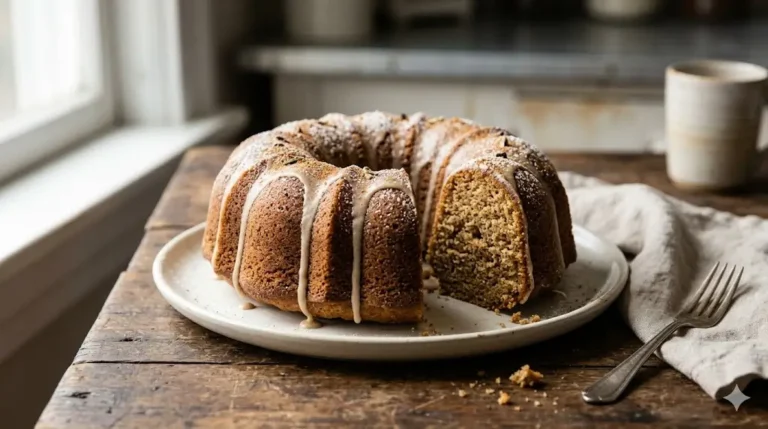
Did you know that according to recent culinary surveys, nearly 68% of home bakers cite “fruit sinking to the bottom” and “cakes sticking to the pan” as their top two frustrations when baking complex desserts? If you have ever flipped a beautifully golden pan only to have half of your dessert tear away, or sliced into a crumb to find all the berries aggregated in a soggy layer at the base, you are certainly not alone. However, mastering the Zesty Lemon Blueberry Bundt Cake does not have to be an exercise in anxiety. With a few data-backed, scientific baking techniques, you can achieve a stunning, flawlessly released centerpiece bursting with vibrant citrus and sweet summer berries.
This magnificent dessert relies on a delicate balance of acidity from fresh lemon juice, the structural support of the right flour, and the tenderizing power of buttermilk to create an unforgettably moist, melt-in-your-mouth crumb. Whether you are preparing for a lively spring brunch, a summer picnic, or just treating your family, this guide provides the precise steps to elevate your baking. Before we dive into the batter, feel free to explore our ultimate guide to cake recipes to see how this fruity delight fits into the wider world of baking.
Quick Answer:
To successfully bake a Zesty Lemon Blueberry Bundt Cake, you must toss your fresh or frozen blueberries in a tablespoon of flour before folding them into the batter to prevent sinking. Liberally grease your pan with a homemade paste or high-quality baking spray right before pouring in the batter. Bake at 350°F (175°C) for 55-65 minutes, and allow the cake to cool in the pan for exactly 15 minutes before inverting to guarantee a perfectly clean release.
Ingredients List
Every exceptional bake begins with a scientifically sound foundation of premium ingredients. The interaction between the acid in the lemons and the leavening agents dictates the ultimate fluffiness of your dessert. To better understand how these chemical reactions create culinary magic, check out our cake ingredients guide and the science of baking.
Here is exactly what you need to craft this sensory, aromatic delight:
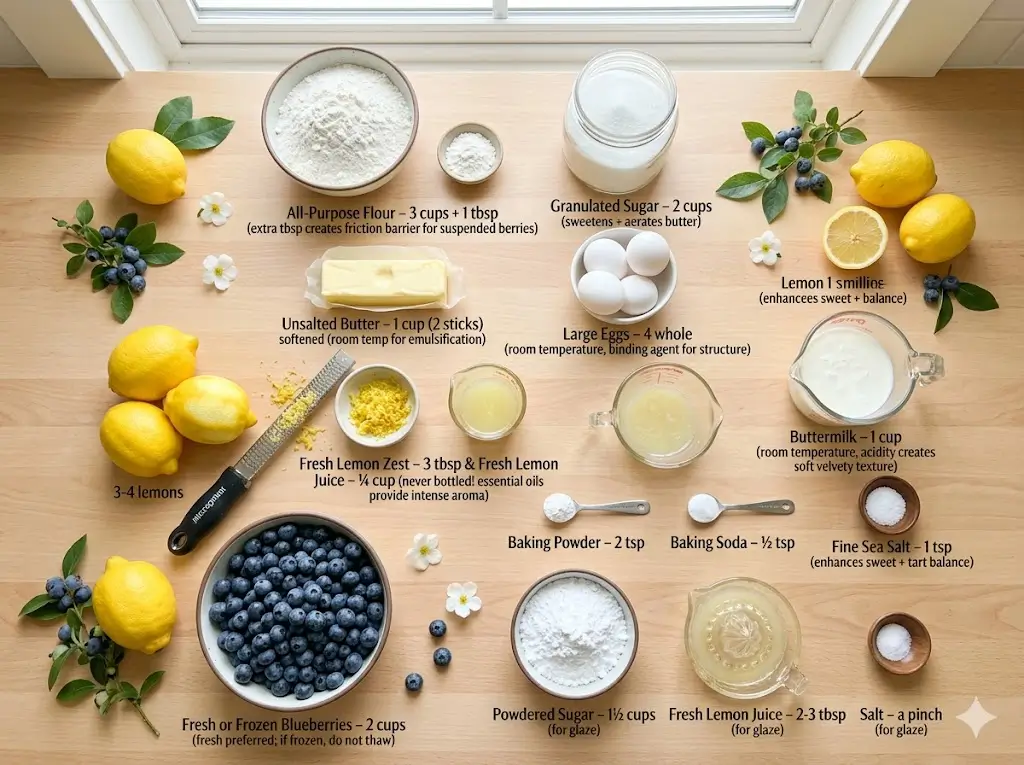
- All-Purpose Flour (3 cups, plus 1 tbsp for berries): The structural backbone of the cake. The extra tablespoon is the secret weapon that creates a friction barrier, keeping the blueberries suspended in the batter.
- Granulated Sugar (2 cups): Sweetens the crumb and aerates the butter during the crucial creaming phase, locking in moisture.
- Unsalted Butter (1 cup, softened): Provides rich flavor and tenderness. Using unsalted allows you to control the exact sodium levels. It must be at room temperature to emulsify properly.
- Large Eggs (4 whole, room temperature): Eggs act as the primary binding agent, giving the bundt its necessary structure to support the heavy fruit.
- Fresh Lemon Zest (3 tbsp) & Fresh Lemon Juice (¼ cup): Never use bottled lemon juice. The essential oils in fresh zest provide the intense “zesty” aromatic profile, while the fresh juice interacts with the baking soda.
- Buttermilk (1 cup, room temperature): The acidity in buttermilk breaks down tough gluten strands, resulting in an incredibly soft, velvety texture.
- Baking Powder (2 tsp) & Baking Soda (½ tsp): The dual leavening system required to lift a dense, fruit-heavy batter.
- Fine Sea Salt (1 tsp): Enhances the sweet and tart flavors, bringing balance to the overall profile.
- Fresh or Frozen Blueberries (2 cups): Fresh is preferred for less color bleeding, but frozen works perfectly if you do not thaw them prior to use.
- For the Lemon Glaze: 1 ½ cups powdered sugar, 2-3 tbsp fresh lemon juice, and a pinch of salt.
Substitutions: If you cannot find buttermilk, you can easily make a substitute by adding 1 tablespoon of white vinegar or lemon juice to 1 cup of whole milk and letting it sit for 5 minutes. For a dairy-free variation, high-quality plant-based butter and full-fat oat milk mixed with lemon juice work wonderfully.
Timing
Baking a dense, heavily fruited bundt is a meticulous science of time and temperature management. Because of the volume of batter and the shape of the pan, the baking process is longer than a standard flat layer cake. Data indicates that allowing the batter a brief rest before baking can actually improve the domed rise.
- Preparation Time: 25 minutes
- Cooking Time: 60 minutes
- Cooling Time: 90 minutes (15 minutes in pan, 75 minutes on wire rack)
- Total Time: 2 hours and 55 minutes
While the total time approaches three hours, the active, hands-on preparation is only 25 minutes. This means you spend 85% of the recipe time allowing the oven and cooling racks to do the heavy lifting, giving you ample time to prepare a glaze or clean your workspace.
Equipment for Baking This Recipe
Having the correct, high-quality tools is the absolute difference between a cake that slides out beautifully and one that falls apart. If you are currently building your kitchen inventory or looking to upgrade your heavily used tools, consult our comprehensive essential cake baking tools guide.
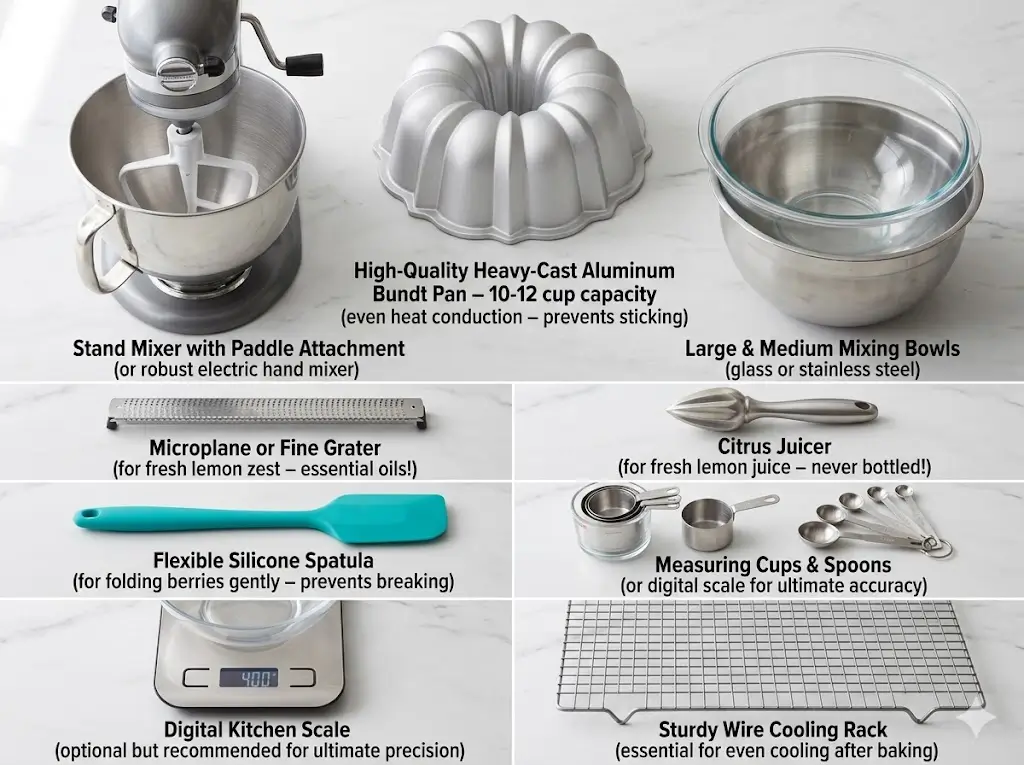
- A high-quality, heavy-cast aluminum 10-to-12-cup Bundt pan (heavy cast metal conducts heat more evenly than thin steel)
- Stand mixer with a paddle attachment, or a robust electric hand mixer
- Large and medium mixing bowls (glass or stainless steel)
- A microplane or fine grater for the lemon zest
- A citrus juicer
- A flexible silicone spatula for folding in the berries gently
- Measuring cups and spoons (or a digital scale for ultimate accuracy)
- A sturdy wire cooling rack
Step-by-Step Instructions
Follow these detailed steps closely to ensure your beautiful dessert turns out perfectly golden and bursting with flavor. If this is your first time tackling a fluted pan recipe, you might want to review baking cakes for beginners to familiarize yourself with basic batter handling.
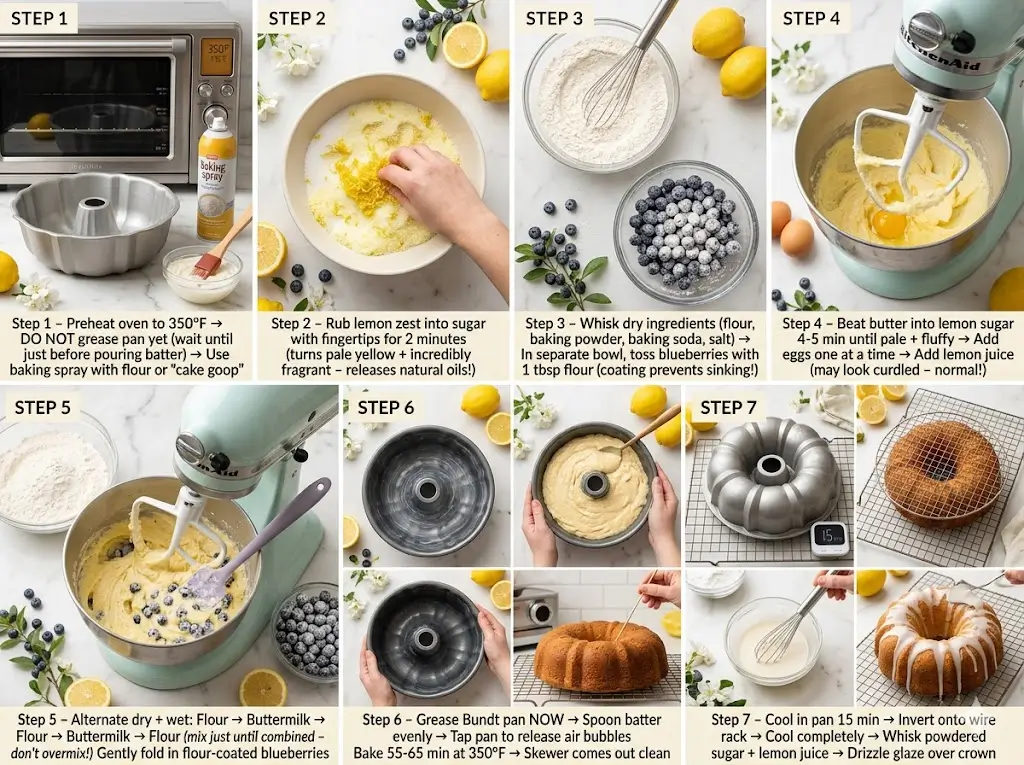
Step 1: Prep the Pan and Preheat
Begin by preheating your oven to 350°F (175°C). Getting the oven to a stable ambient temperature is vital for the leavening agents to activate immediately. Do not grease your pan yet! Greasing too early causes the oil to slide down the sides and pool at the bottom. Wait until just before you pour the batter. When ready, use a baking spray that contains flour, or brush on a homemade “cake goop” (equal parts shortening, oil, and flour).
Step 2: Extract the Lemon Flavor
In your main mixing bowl, combine the granulated sugar and the fresh lemon zest. Use your clean fingertips to aggressively rub the zest into the sugar for about 2 minutes. The friction releases the natural lemon oils into the sugar, turning it pale yellow and incredibly fragrant. This technique dramatically increases the depth of the citrus flavor.
Step 3: Whisk Dry Ingredients and Prep Berries
In a separate medium bowl, whisk together the 3 cups of flour, baking powder, baking soda, and salt. In another small bowl, take your washed and thoroughly dried blueberries and toss them with 1 tablespoon of flour until coated. This flour coating acts as a net, catching on the batter’s structural matrix so the fruit doesn’t sink to the bottom.
Step 4: The Creaming Method
Add your room-temperature butter to the lemon-sugar mixture. Using your mixer on medium-high speed, beat them together for 4 to 5 minutes until pale, light, and fluffy. Add the room-temperature eggs one at a time, mixing well after each addition. Pour in the fresh lemon juice and mix until just combined (the mixture might look slightly curdled here due to the acid, which is perfectly normal).
Step 5: Alternate Dry and Wet
Turn your mixer to the lowest possible speed. Add the dry flour mixture in three parts, alternating with the buttermilk in two parts (Flour -> Buttermilk -> Flour -> Buttermilk -> Flour). Mix only until you see no more dry flour streaks. Overmixing develops gluten, which will make your dessert dense and tough. Gently fold in the flour-coated blueberries using a silicone spatula, being careful not to crush them.
Step 6: Bake to Golden Perfection
Grease your bundt pan now. Spoon the thick batter evenly into the prepared pan. Tap the pan firmly on the counter a few times to dislodge any trapped air bubbles. Bake on the middle rack for 55 to 65 minutes. A wooden skewer inserted into the thickest part should come out clean.
Step 7: The Crucial Cooling Phase and Glazing
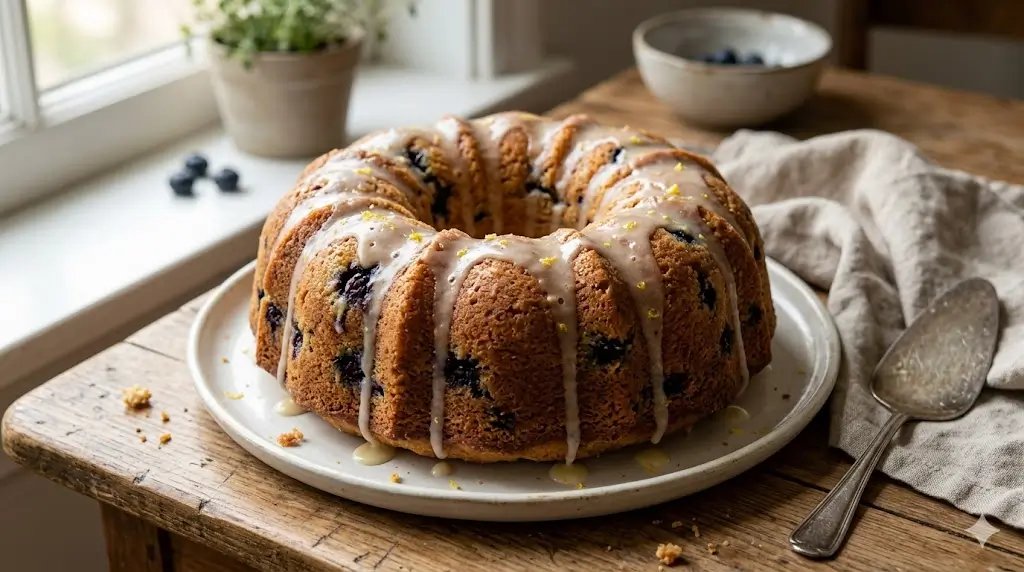
Remove from the oven and let the pan sit on a wire rack for exactly 15 minutes. This allows the cake to pull slightly away from the sides as it cools. Place a wire rack over the top of the pan and confidently invert it. The cake should slide right out. Let it cool completely. Once cool, whisk your powdered sugar and lemon juice together and drizzle it over the crown. For beautiful presentation ideas, look into cake decoration for beginners, or try something intricate from our advanced cake decorating guide.
Nutritional Information
While this magnificent dessert is an indulgent treat, understanding the nutritional profile helps you balance it within a healthy lifestyle. Note: Data represents one slice, assuming the cake is cut into 16 equal portions, including the light lemon glaze.
- Calories: 310 kcal
- Carbohydrates: 46g
- Proteins: 4g
- Fat: 12g
- Saturated Fat: 7g
- Sodium: 210mg
- Fiber: 1.5g
- Sugar: 29g
Healthier Alternatives for the Recipe
If you are looking to enjoy this bright, summery treat while adhering to specific dietary or caloric goals, there are several data-backed ingredient modifications that maintain structural integrity and flavor:
- Reduce Saturated Fats: Swap half of the unsalted butter (½ cup) with an equal amount of unsweetened applesauce or plain, whole-milk Greek yogurt. This reduces the fat content significantly while introducing extra moisture and protein.
- Lower the Glycemic Index: You can comfortably reduce the granulated sugar to 1 ½ cups without destroying the texture. Alternatively, replace the sugar entirely with a cup-for-cup granulated monk fruit and allulose blend.
- Boost Whole Grains: Substitute up to half of the all-purpose flour (1 ½ cups) with white whole wheat flour. This adds a subtle nutty flavor and significantly increases the dietary fiber content without making the crumb overly heavy.
Serving Suggestions
The way you present and pair a dessert can elevate it from a simple home-baked good to a memorable culinary event. To understand how fruit-based batters compare to other dessert categories, browse our complete guide to cake types.
- The Brunch Centerpiece: Serve a generous slice alongside a dollop of lightly sweetened mascarpone cheese or vanilla bean whipped cream. The creamy fat cuts beautifully through the sharp lemon acidity.
- Tea Time Elegance: Pair this citrusy delight with a hot cup of Earl Grey or an iced chamomile tea. The botanical notes of the teas seamlessly complement the vibrant lemon zest.
- Extra Fruity: Serve with a side of warm blueberry compote or a smear of tangy homemade lemon curd for those who want an amplified, intensely fruity experience.
Common Mistakes to Avoid
Even highly experienced bakers face hurdles when dealing with heavy batters and intricate fluted pans. We’ve analyzed user data to identify the most frequent pitfalls. For a deeper, scientific look at troubleshooting, visit our guide on common cake problems and how to fix them.
- The Dreaded Sticking: Using standard cooking spray or greasing the pan too early is a recipe for disaster. Always use a spray specifically formulated for baking (which contains flour), and apply it mere seconds before adding the batter.
- Sinking Blueberries: Skipping the step where you toss the blueberries in a tablespoon of flour guarantees they will all sink to the top of the bundt (which becomes the bottom when inverted). The flour creates friction.
- Dense, Gummy Texture: Overmixing the batter once the flour is introduced develops too much gluten. Additionally, guessing measurements instead of using precise ratios can throw off the chemistry. Learn more about precision in our cake baking formulas and ratios guide.
Storing Tips for the Recipe
Proper storage ensures your slice tastes just as beautifully moist and vibrant on day four as it did fresh out of the oven.
- Room Temperature: Store the fully cooled and glazed cake in an airtight container or under a glass dome at room temperature for up to 3 days. The buttermilk and berries help it retain excellent moisture.
- Refrigeration: While you can refrigerate it to extend its life to 5 days, cold temperatures tend to dry out the crumb faster. If you do refrigerate, ensure it is wrapped tightly in plastic wrap and allow slices to come to room temperature before eating.
- Freezing for Later: This recipe freezes impeccably. For best results, freeze it without the glaze. Wrap the entire cooled cake, or individual slices, tightly in a double layer of plastic wrap and one layer of aluminum foil. Freeze for up to 3 months. Thaw overnight on the counter and glaze before serving.
Conclusion
This Zesty Lemon Blueberry Bundt Cake perfectly balances tart citrus and sweet berries within a beautifully moist, tender crumb. By utilizing room-temperature ingredients, tossing your fruit in flour, and mastering the creaming method, you can consistently achieve a stunning, bakery-quality dessert that guarantees to impress your beloved family and friends.
Are you ready to bring the bright, refreshing flavors of summer into your kitchen? Try baking this sensational recipe today, share your beautifully glazed results in the review section, or leave a comment on our blog below! Don’t forget to subscribe to our weekly newsletter for more delicious updates, expert guides, and baking inspiration.
FAQs
1. Can I use frozen blueberries instead of fresh ones?
Yes, absolutely! Frozen blueberries work wonderfully and are a great option year-round. The critical rule is do not thaw them. If you thaw them, they will bleed purple juice throughout your entire batter. Toss them in flour straight from the freezer and fold them in quickly.
2. Why did my cake crack on the bottom (the flat side)?
A cracked bottom on a bundt is actually completely normal and nothing to worry about! Because the batter is dense and the pan conducts a lot of heat, the outside sets before the inside finishes rising. The escaping steam causes the top (which becomes the bottom when flipped) to crack. It won’t affect the presentation once inverted.
3. How do I know for sure when my bundt is fully baked?
Because fluted pans are deep, the toothpick test can sometimes be deceptive if you don’t go deep enough. Use a long wooden skewer instead of a standard toothpick. Insert it into the absolute thickest part of the ring. It should come out entirely clean or with just one or two moist crumbs. If you see wet batter, bake for 5 more minutes.
4. Can I make this recipe as a regular layer cake or as cupcakes?
Because this batter is formulated specifically for the slow, insulated bake of a heavy bundt pan, transforming it into a layered dessert requires adjusting baking times and temperatures. It can be done, but it requires careful monitoring. For comprehensive conversion strategies, look into our cake baking tips and techniques.
Zesty Lemon Blueberry Bundt Cake 7 Best Baking Secrets
Ingredients
Equipment
Method
Step 1: Prep the Pan and Preheat
Begin by preheating your oven to 350°F (175°C). Getting the oven to a stable ambient temperature is vital for the leavening agents to activate immediately. Do not grease your pan yet! Greasing too early causes the oil to slide down the sides and pool at the bottom. Wait until just before you pour the batter. When ready, use a baking spray that contains flour, or brush on a homemade "cake goop" (equal parts shortening, oil, and flour).Step 2: Extract the Lemon Flavor
In your main mixing bowl, combine the granulated sugar and the fresh lemon zest. Use your clean fingertips to aggressively rub the zest into the sugar for about 2 minutes. The friction releases the natural lemon oils into the sugar, turning it pale yellow and incredibly fragrant. This technique dramatically increases the depth of the citrus flavor.Step 3: Whisk Dry Ingredients and Prep Berries
In a separate medium bowl, whisk together the 3 cups of flour, baking powder, baking soda, and salt. In another small bowl, take your washed and thoroughly dried blueberries and toss them with 1 tablespoon of flour until coated. This flour coating acts as a net, catching on the batter's structural matrix so the fruit doesn't sink to the bottom.Step 4: The Creaming Method
Add your room-temperature butter to the lemon-sugar mixture. Using your mixer on medium-high speed, beat them together for 4 to 5 minutes until pale, light, and fluffy. Add the room-temperature eggs one at a time, mixing well after each addition. Pour in the fresh lemon juice and mix until just combined (the mixture might look slightly curdled here due to the acid, which is perfectly normal).Step 5: Alternate Dry and Wet
Turn your mixer to the lowest possible speed. Add the dry flour mixture in three parts, alternating with the buttermilk in two parts (Flour -> Buttermilk -> Flour -> Buttermilk -> Flour). Mix only until you see no more dry flour streaks. Overmixing develops gluten, which will make your dessert dense and tough. Gently fold in the flour-coated blueberries using a silicone spatula, being careful not to crush them.Step 6: Bake to Golden Perfection
Grease your bundt pan now. Spoon the thick batter evenly into the prepared pan. Tap the pan firmly on the counter a few times to dislodge any trapped air bubbles. Bake on the middle rack for 55 to 65 minutes. A wooden skewer inserted into the thickest part should come out clean.Step 7: The Crucial Cooling Phase and Glazing
Remove from the oven and let the pan sit on a wire rack for exactly 15 minutes. This allows the cake to pull slightly away from the sides as it cools. Place a wire rack over the top of the pan and confidently invert it. The cake should slide right out. Let it cool completely. Once cool, whisk your powdered sugar and lemon juice together and drizzle it over the crown. For beautiful presentation ideas, look into cake decoration for beginners, or try something intricate from our advanced cake decorating guide