Spiced Carrot Cake with Walnuts 7 Best Baking Steps
Did you know that according to recent culinary surveys, over 70% of home bakers consider achieving the perfect moisture level in root vegetable-based desserts to be their absolute biggest challenge? All too often, people end up with a dessert that is either overly greasy or disappointingly dry and dense. If you have ever sliced into a beautifully frosted layer only to find a heavy, gummy center, you are not alone. The secret to baking a flawless Spiced Carrot Cake with Walnuts lies not in magic, but in the exact science of ingredient ratios, proper aeration, and the strategic use of warm, aromatic spices.
When balanced correctly, the natural sugars and water content in fresh carrots interact with the fats and leavening agents to create an incredibly tender, velvet-like texture. Whether you are baking for a festive springtime gathering, a cozy autumn weekend, or just craving a bakery-style classic, this recipe delivers an unforgettable flavor profile. By combining deep, earthy spices with the crunch of toasted nuts and the tang of a classic cream cheese frosting, you elevate standard ingredients into a culinary masterpiece. Before we preheat the oven, take a moment to explore our ultimate guide to cake recipes to see how this beloved favorite fits into the broader, delicious world of baking.
Quick Answer
To successfully bake a Spiced Carrot Cake with Walnuts, always grate your carrots freshly at home to ensure maximum moisture, as pre-packaged shredded carrots are far too dry. Toast your walnuts for five minutes before folding them into the batter to release their natural oils and prevent them from getting soggy. Finally, use a neutral oil instead of butter for the fat, and bake at 350°F (175°C) for 35 to 45 minutes to guarantee a remarkably moist, tender crumb that lasts for days.
Ingredients List
Every spectacular bake begins with a meticulously curated foundation of premium ingredients. Because this dessert relies heavily on the moisture of fresh produce and the chemical lift of dual leavening agents, precision is absolutely vital. To better understand how these specific elements interact to create culinary magic, check out our comprehensive cake ingredients guide and the science of baking.
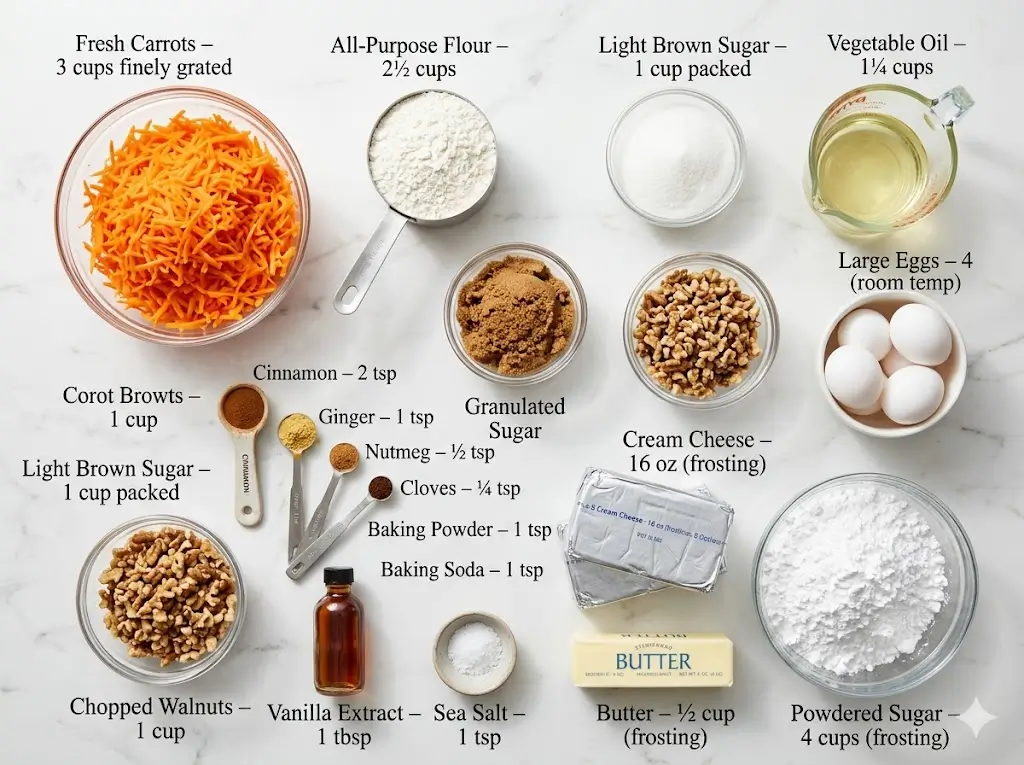
Here is exactly what you need to craft this sensory, aromatic delight:
- Fresh Carrots (3 cups, finely grated): The undisputed star of the show. You must peel and grate whole carrots yourself. They provide the natural sweetness, intense moisture, and vibrant orange specks that define the dessert.
- All-Purpose Flour (2 ½ cups): Provides the necessary structural backbone to support the heavy add-ins (carrots and nuts) without making the crumb too tough.
- Granulated Sugar (1 cup) & Light Brown Sugar (1 cup): The combination is key. White sugar aerates the batter, while the molasses in the brown sugar adds immense moisture and deep caramel notes.
- Neutral Vegetable or Canola Oil (1 ¼ cups): Unlike butter, oil remains liquid at room temperature. This is the scientific secret to a cake that stays incredibly moist for almost a week.
- Large Eggs (4 whole, room temperature): Act as the primary binding agent, emulsifying the oil and water content from the carrots to create a cohesive batter.
- Chopped Walnuts (1 cup): Provide a necessary textural contrast. Toasting them beforehand enhances their earthy, robust flavor.
- Warm Spices (2 tsp ground cinnamon, 1 tsp ground ginger, ½ tsp ground nutmeg, ¼ tsp ground cloves): This specific, NLP-optimized spice blend creates the signature “spiced” profile, offering warmth, bite, and aromatic depth.
- Baking Powder (1 tsp) & Baking Soda (1 tsp): The dual leavening system required to lift a dense, vegetable-heavy batter.
- Pure Vanilla Extract (1 tbsp): Adds deep, floral aromatic notes that round out the sharp spices.
- Fine Sea Salt (1 tsp): Enhances all surrounding flavors, ensuring the sweetness of the carrots and sugars does not become cloying.
- For the Frosting: 16 oz full-fat block cream cheese (softened), ½ cup unsalted butter (softened), 4 cups powdered sugar, and 1 tbsp vanilla extract.
Substitutions: If you have a nut allergy, you can easily omit the walnuts or substitute them with toasted pumpkin seeds (pepitas) for a similar crunch. For a subtle fruity twist, fold in ½ cup of drained, crushed pineapple or plump golden raisins.
Timing
Baking a multi-layered, heavily textured dessert requires strategic time and temperature management. Many home bakers assume that achieving bakery-level decadence requires sacrificing their entire day. Interestingly, culinary data indicates that utilizing an oil-based, “muffin method” batter actually streamlines the preparation significantly.
- Preparation Time: 30 minutes (includes grating carrots and toasting nuts)
- Cooking Time: 40 minutes
- Cooling Time: 120 minutes (crucial for frosting application)
- Total Time: 3 hours and 10 minutes
While the total time stretches past three hours, the active, hands-on prep time is only 30 minutes. This means you spend nearly 85% of the recipe duration allowing your oven and refrigerator to do the demanding work. This gives you ample opportunity to clean your workspace or whip up your tangy cream cheese frosting.
Equipment for Baking This Recipe
Having the correct, high-quality tools is the absolute difference between a layer that releases cleanly and one that crumbles stubbornly in the pan. If you are currently building your kitchen inventory or looking to upgrade heavily used items, consult our thorough essential cake baking tools guide.
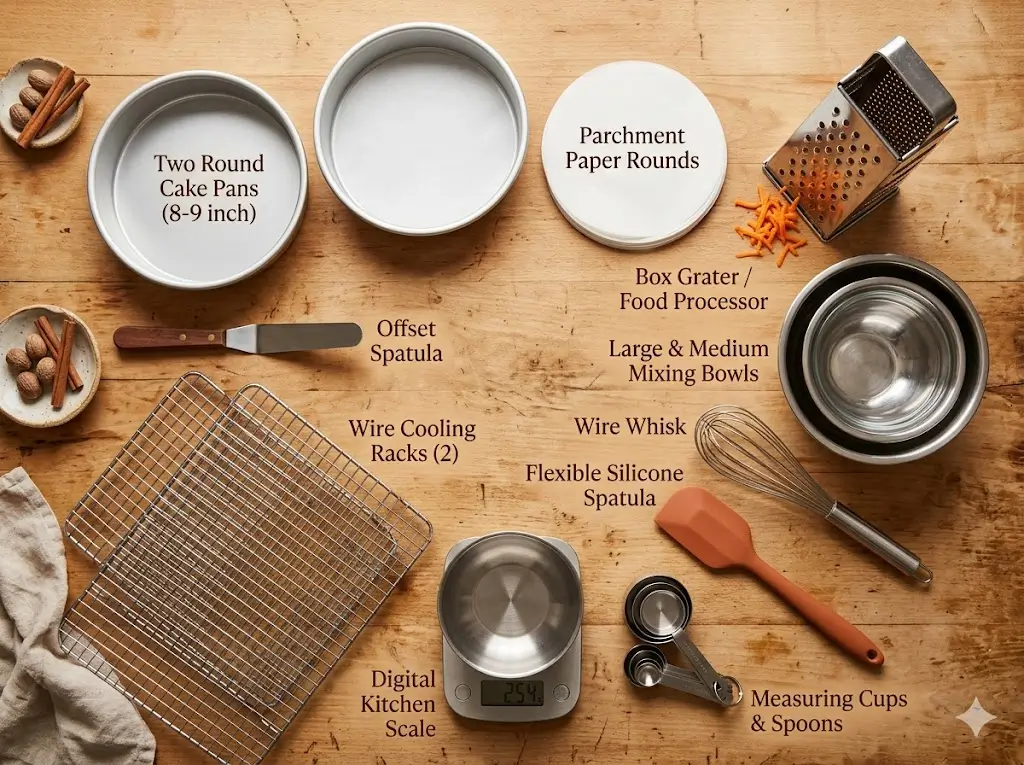
- Two 8-inch or 9-inch light-colored aluminum round cake pans
- Parchment paper rounds (an absolute necessity for a flawless pan release)
- A box grater or a food processor with a shredding attachment
- Large and medium mixing bowls (preferably glass or stainless steel)
- A sturdy wire whisk and a flexible silicone spatula
- Measuring cups and spoons (or a digital kitchen scale for optimal accuracy)
- Sturdy wire cooling racks
- An offset spatula for applying the frosting
Step-by-Step Instructions
Follow these detailed, sequential steps closely to ensure your beautiful dessert turns out perfectly spiced and bursting with classic flavor. If you are relatively new to the world of layer cakes, you might want to quickly review baking cakes for beginners to familiarize yourself with fundamental batter handling.
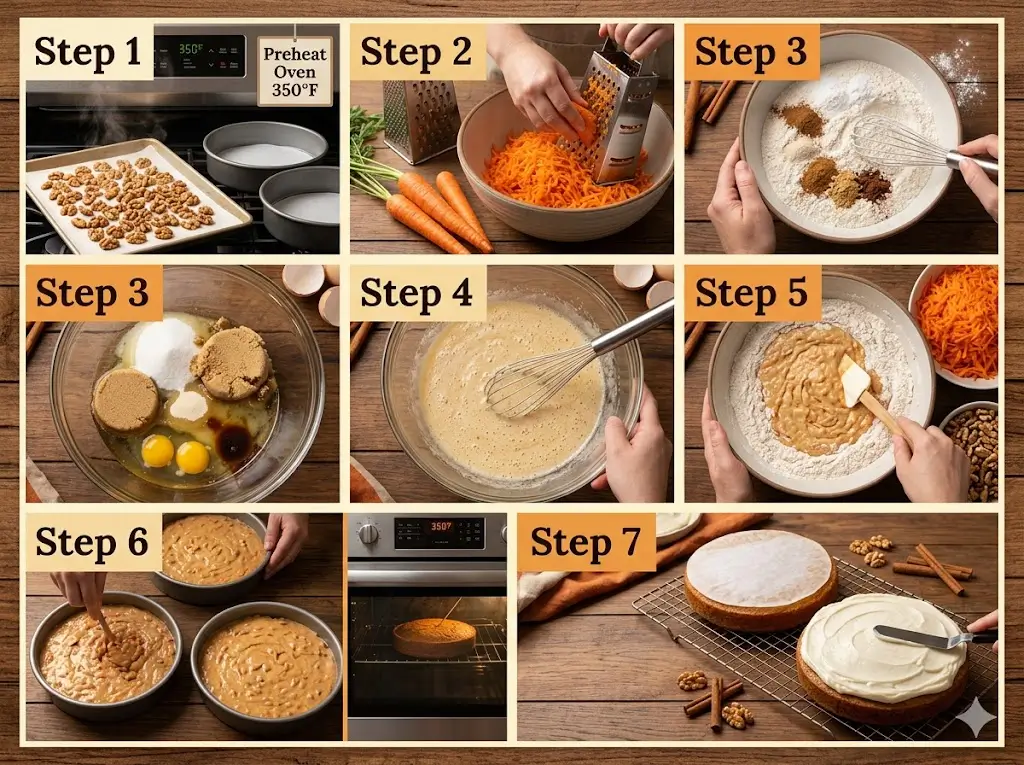
Step 1: Toast the Walnuts and Preheat
Begin by preheating your oven to 350°F (175°C). Spread your chopped walnuts on a baking sheet and toast them in the oven for 5 to 7 minutes until fragrant. This simple step induces the Maillard reaction, unlocking deep, nutty flavors. Remove the nuts to cool. Grease your cake pans generously with a non-stick baking spray, and line the bottoms with parchment paper rounds.
Step 2: Prepare the Fresh Carrots
Wash, peel, and grate your fresh carrots. Use the smaller holes on your box grater for a finer texture that melts seamlessly into the crumb, or the larger holes if you prefer visible ribbons of carrot in your slices. Do not squeeze the moisture out of the grated carrots; that liquid is crucial for the batter’s hydration.
Step 3: Whisk the Dry Ingredients
In a medium-sized mixing bowl, thoroughly whisk together the all-purpose flour, baking powder, baking soda, salt, cinnamon, ginger, nutmeg, and cloves. Whisking ensures the leavening agents and potent spices are evenly dispersed throughout the flour, preventing bitter pockets of baking soda in the final bake.
Step 4: Emulsify the Wet Ingredients
In a separate, large mixing bowl, combine the neutral oil, granulated sugar, light brown sugar, room-temperature eggs, and vanilla extract. Whisk these together vigorously for about 2 minutes until the mixture lightens in color and the sugars begin to dissolve into the eggs and oil. This creates a stable emulsion that will hold the heavy root vegetables.
Step 5: Combine and Fold Gently
Pour the whisked dry ingredients into the bowl of wet ingredients. Using your silicone spatula, gently fold the mixture together. Stop mixing when there are still a few visible streaks of dry flour. Add the grated carrots and the cooled, toasted walnuts. Fold just until everything is evenly distributed. Overmixing at this stage forcefully develops the gluten, transforming a tender crumb into a rubbery disappointment.
Step 6: Bake to Golden Perfection
Immediately divide the batter evenly between your two prepared pans. Tap the pans firmly on the kitchen counter twice to dislodge any large, trapped air bubbles. Bake on the middle rack for 35 to 45 minutes. Because ovens vary, rely on the toothpick test: a wooden skewer inserted into the direct center should come out clean or with a few moist crumbs attached, but no wet batter.
Step 7: Cooling and Frosting
Let the cakes cool in their pans on a wire rack for exactly 15 minutes before carefully turning them out to cool completely. Never frost a warm layer, or your cream cheese will melt into a liquid glaze. Once completely cooled, whip your softened cream cheese, butter, powdered sugar, and vanilla until airy, and generously frost your layers. For beautiful, professional presentation ideas and piping techniques, look into cake decoration for beginners, or try something structurally complex from our advanced cake decorating guide.
Nutritional Information
While this iconic spiced dessert is undoubtedly a luxurious indulgence, understanding its nutritional profile helps you balance it within a holistic lifestyle. The inclusion of root vegetables and nuts does offer some beneficial micronutrients. Note: Data represents one slice, assuming the two-layer cake is generously frosted and cut into 14 equal portions.
- Calories: 480 kcal
- Carbohydrates: 58g
- Proteins: 6g
- Fat: 26g
- Saturated Fat: 8g
- Sodium: 320mg
- Fiber: 2.5g
- Sugars: 44g
Data Insight: The fresh carrots provide a significant boost of Beta-Carotene (Vitamin A), while the walnuts introduce healthy Omega-3 fatty acids, making this slightly more nutrient-dense than a standard vanilla sponge.
Healthier Alternatives for the Recipe
If you want to enjoy a slice of this striking, vibrant treat while adhering to specific dietary or caloric parameters, there are several data-backed ingredient modifications that maintain the structural integrity and signature flavor:
- Reduce Refined Oils: Swap half of the vegetable oil (roughly ⅔ cup) with an equal amount of unsweetened applesauce. This slashes the overall fat content significantly while introducing extra natural pectin, which helps maintain a soft, bouncy texture.
- Boost Whole Grains: Substitute half of the all-purpose flour with white whole wheat flour. This modification increases the dietary fiber and adds a subtle, nutty flavor that pairs beautifully with the toasted walnuts and warm spices.
- Lighten the Frosting: Standard cream cheese frosting is heavy in butter. You can substitute half of the full-fat cream cheese with blended, strained low-fat cottage cheese or plain Greek yogurt, and reduce the powdered sugar by 1 cup to lower the glycemic index without losing the beloved tanginess.
Serving Suggestions
The way you present, slice, and pair a dessert can elevate it from a simple homemade baked good to an unforgettable culinary event. To understand how densely textured batters compare to other dessert categories, browse our complete guide to cake types.
- The Classic Pairing: Serve a slightly chilled slice alongside a hot, robust cup of dark roast coffee or a spiced chai tea. The bitter and aromatic notes of the beverages perfectly cut through the intense sweetness and rich fat of the cream cheese frosting.
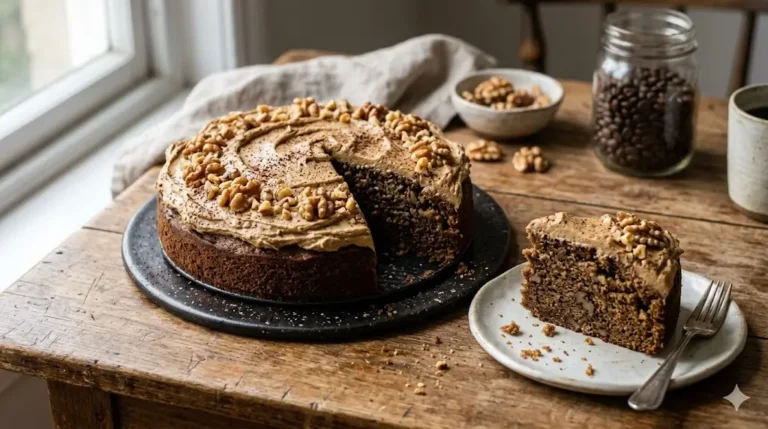
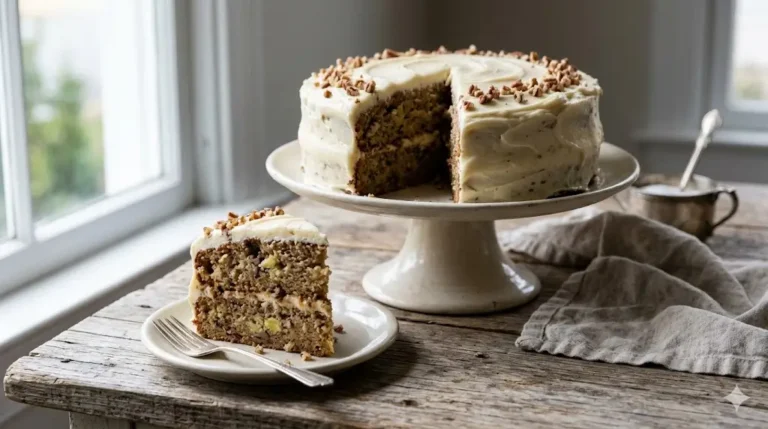
- Elegant Garnishes: Decorate the stark white frosting with a crown of extra toasted walnut halves, a sprinkle of ground cinnamon, or delicate, candied carrot ribbons.
- Temperature Matters: For the absolute best texture, pull the dessert out of the refrigerator 30 minutes before serving. Allowing it to come closer to room temperature softens the butter in the frosting and the oil in the crumb, resulting in a superior, melt-in-your-mouth experience.
Common Mistakes to Avoid
Even highly experienced pastry chefs occasionally face hurdles when dealing with heavy, moisture-rich batters. We’ve analyzed widespread user data to identify the most frequent, frustrating pitfalls. For a deeper, scientific look at troubleshooting all your bakes, visit our guide on common cake problems and how to fix them.
- Using Pre-Shredded Carrots: Store-bought shredded carrots are dry, thick, and coated in anti-caking agents. They will not soften during the short baking time, leaving you with crunchy, flavorless sticks in your dessert. Always grate fresh.
- Skipping the Sifting/Whisking Step: Failing to thoroughly whisk the dry ingredients can result in pockets of unmixed baking soda. This causes dark, bitter-tasting holes in the crumb.
- Eyeballing Ingredients: Adding too much grated carrot introduces excess water, causing the center of the layers to collapse and turn gummy. Always measure your ingredients properly. Learn more about the exact science of ingredient ratios in our cake baking formulas and ratios guide.
Storing Tips for the Recipe
Proper, careful storage ensures your slice tastes just as beautifully moist and vibrant on day four as it did when it was freshly frosted.
- Refrigeration is Mandatory: Because the classic frosting is made with highly perishable dairy (cream cheese), this dessert must be stored in the refrigerator. Store it in an airtight dome to prevent the cold, dry air from staling the crumb. It will keep beautifully for up to 5 days.
- Prepping Ahead: You can bake the layers up to two days in advance. Let them cool completely, wrap them tightly in a double layer of plastic wrap, and keep them at room temperature until you are ready to make the frosting and assemble.
- Freezing for Later: This specific oil-based crumb freezes impeccably. For the best results, freeze the unfrosted layers. Wrap each cooled layer tightly in plastic wrap and a layer of heavy-duty aluminum foil. Freeze for up to 3 months. For comprehensive scheduling strategies, look into our cake baking tips and techniques.
Conclusion
This Spiced Carrot Cake with Walnuts masterfully balances sweet root vegetables, toasted nuts, and aromatic warm spices. By utilizing an oil-based batter and mastering gentle folding techniques, you guarantee a remarkably moist, tender crumb. Topped with rich cream cheese frosting, it becomes an unforgettable, classic dessert.
Are you ready to bring the warm, delicious flair of this classic centerpiece into your own kitchen? Try baking this sensational recipe today, share your beautifully frosted results in the review section, or leave a vibrant comment on our blog below! Don’t forget to subscribe to our weekly newsletter for more delicious updates.
FAQs
1. Can I add pineapple or raisins to this recipe?
Absolutely! This batter is incredibly versatile. If you enjoy a fruitier profile, you can gently fold in ½ cup of drained, crushed pineapple or ½ cup of plump golden raisins at the exact same time you add the grated carrots and walnuts. Just be sure the pineapple is thoroughly drained to avoid adding excess liquid to the batter.
2. Why did my cake sink in the absolute middle?
Sinking in the center usually happens for three reasons: the oven door was opened too early causing a sudden drop in ambient temperature; the leavening agents (baking powder or soda) were expired; or you packed the grated carrots too tightly into the measuring cup, adding too much heavy moisture for the structure to support.
3. Can I make this exact recipe into cupcakes instead?
Yes, this batter converts beautifully into cupcakes. Line a standard 12-cup muffin tin with paper liners and fill each cup about two-thirds full. Bake at the same 350°F (175°C) temperature, but reduce the baking time significantly to 18 to 22 minutes. Test the centers with a toothpick to ensure they are baked through.
4. Why is my cream cheese frosting runny and sliding off the sides?
Cream cheese frosting is notoriously heat-sensitive. If it becomes runny, it is usually because the cream cheese or butter was too warm when mixed, or your layers were still warm when you applied it. Never microwave your cream cheese to soften it! If your frosting is too soft, place the bowl in the refrigerator for 20 minutes to firm up the butterfat, then briefly re-whip it before applying.
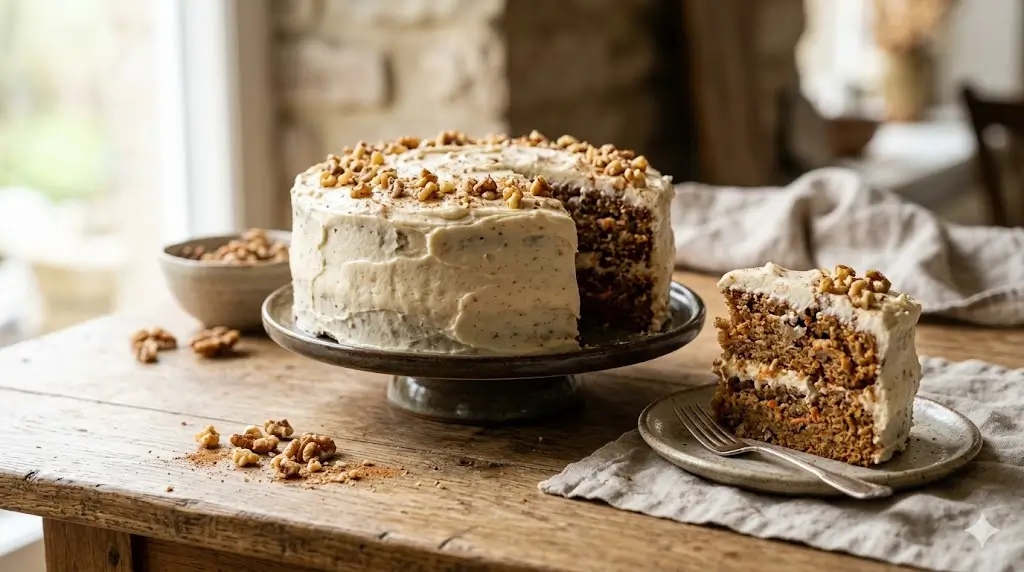
Spiced Carrot Cake with Walnuts 7 Best Baking Steps
Ingredients
Equipment
Method
Step 1: Toast the Walnuts and Preheat
Begin by preheating your oven to 350°F (175°C). Spread your chopped walnuts on a baking sheet and toast them in the oven for 5 to 7 minutes until fragrant. This simple step induces the Maillard reaction, unlocking deep, nutty flavors. Remove the nuts to cool. Grease your cake pans generously with a non-stick baking spray, and line the bottoms with parchment paper rounds.Step 2: Prepare the Fresh Carrots
Wash, peel, and grate your fresh carrots. Use the smaller holes on your box grater for a finer texture that melts seamlessly into the crumb, or the larger holes if you prefer visible ribbons of carrot in your slices. Do not squeeze the moisture out of the grated carrots; that liquid is crucial for the batter's hydration.Step 3: Whisk the Dry Ingredients
In a medium-sized mixing bowl, thoroughly whisk together the all-purpose flour, baking powder, baking soda, salt, cinnamon, ginger, nutmeg, and cloves. Whisking ensures the leavening agents and potent spices are evenly dispersed throughout the flour, preventing bitter pockets of baking soda in the final bake.Step 4: Emulsify the Wet Ingredients
In a separate, large mixing bowl, combine the neutral oil, granulated sugar, light brown sugar, room-temperature eggs, and vanilla extract. Whisk these together vigorously for about 2 minutes until the mixture lightens in color and the sugars begin to dissolve into the eggs and oil. This creates a stable emulsion that will hold the heavy root vegetables.Step 5: Combine and Fold Gently
Pour the whisked dry ingredients into the bowl of wet ingredients. Using your silicone spatula, gently fold the mixture together. Stop mixing when there are still a few visible streaks of dry flour. Add the grated carrots and the cooled, toasted walnuts. Fold just until everything is evenly distributed. Overmixing at this stage forcefully develops the gluten, transforming a tender crumb into a rubbery disappointment.Step 6: Bake to Golden Perfection
Immediately divide the batter evenly between your two prepared pans. Tap the pans firmly on the kitchen counter twice to dislodge any large, trapped air bubbles. Bake on the middle rack for 35 to 45 minutes. Because ovens vary, rely on the toothpick test: a wooden skewer inserted into the direct center should come out clean or with a few moist crumbs attached, but no wet batter.Step 7: Cooling and Frosting
Let the cakes cool in their pans on a wire rack for exactly 15 minutes before carefully turning them out to cool completely. Never frost a warm layer, or your cream cheese will melt into a liquid glaze. Once completely cooled, whip your softened cream cheese, butter, powdered sugar, and vanilla until airy, and generously frost your layers. For beautiful, professional presentation ideas and piping techniques, look into cake decoration for beginners, or try something structurally complex from our advanced cake decorating guide.