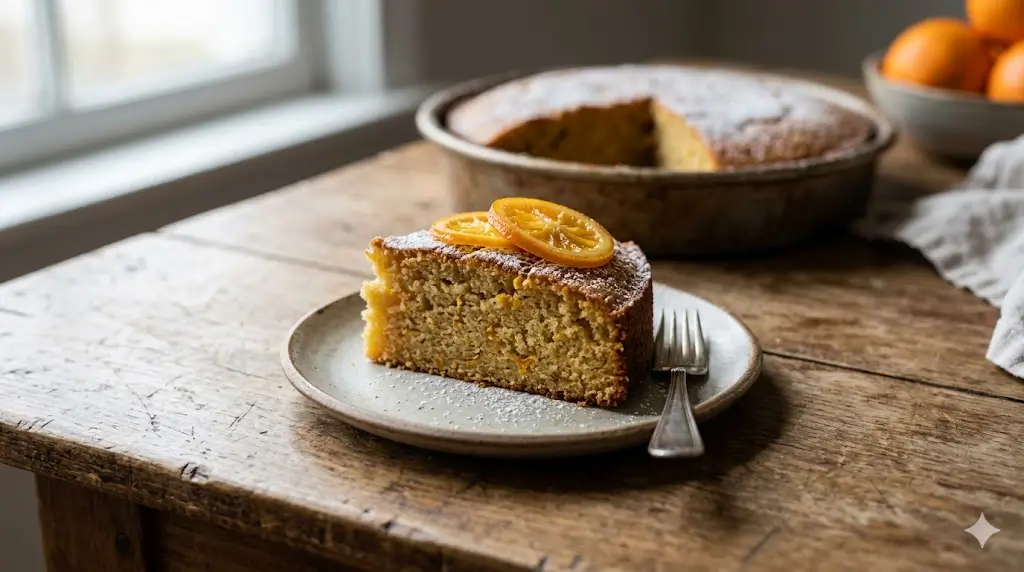
Ingredients
Equipment
Method
Step 1: Infuse the Sugar with Citrus Oils
Preheat your oven to 350°F (175°C). Generously grease your 9-inch pan with olive oil or baking spray and line the bottom with parchment paper. In a large mixing bowl, combine the granulated white sugar and the fresh orange zest. Using your clean fingertips, vigorously rub the zest into the sugar for about 2 to 3 minutes. The sugar will turn a pale, beautiful yellow and feel like wet sand, releasing the incredibly fragrant essential oils from the citrus peel directly into the sugar crystals. This technique guarantees the orange flavor permeates every single bite. For those looking to master the exact science behind these precise ingredient alterations and flavor extractions, reviewing cake baking formulas and ratios can drastically improve your foundational skills.Step 2: Whisk and Emulsify the Wet Ingredients
To your bowl of fragrant orange sugar, add the room-temperature eggs. Whisk them vigorously for 2 minutes until the mixture is pale, thick, and well combined. While continuing to whisk constantly, slowly drizzle in the extra virgin olive oil in a steady stream to ensure a tight, stable emulsion. Once the oil is fully incorporated, whisk in the fresh orange juice, milk (or almond milk), vanilla paste, and almond extract. If you are new to the emulsification method and liquid batters, you might find our comprehensive resource on baking cakes for beginners highly beneficial for mastering these foundational mixing techniques.Step 3: Combine Dry Elements Gently
In a separate bowl, place your fine-mesh sieve over the top and sift together the all-purpose flour, baking powder, baking soda, and fine sea salt. Pour the sifted dry ingredients into the wet olive oil mixture. Using your large silicone spatula, gently fold the batter together using a sweeping motion from the bottom to the top. Stop mixing the exact second the last streak of flour disappears. Overmixing will develop the gluten and result in a tough, rubbery cake. Mastering this delicate incorporation process is one of the many cake baking tips and techniques that permanently separate amateur home bakers from seasoned pastry professionals.Step 4: Bake the Citrus Sponge Perfectly
Pour the incredibly fragrant, golden batter into your prepared cake pan. Tap the pan gently on the counter twice to release any large trapped air bubbles. Bake on the middle rack of your oven for 45 to 55 minutes. The cake is done when the top is a deep golden brown, springs back slightly when touched, and a toothpick inserted into the exact center comes out clean or with a few moist crumbs. Because oven temperatures vary, start checking closely at the 40-minute mark. Allow the cake to cool in the pan for 15 minutes before carefully releasing the springform ring and transferring the cake to a wire rack to cool completely to room temperature.Step 5: Create the Glaze and Decorate
While the cake cools, prepare your simple citrus glaze. In a small bowl, whisk together the sifted powdered sugar, orange juice, orange zest, and a tiny pinch of salt until perfectly smooth. The glaze should be thick but pourable. Once the cake is completely cool to the touch, pour the glaze over the center, using an offset spatula to gently coax it toward the edges so it drips beautifully down the sides. For those just starting out with garnishes and presentation, checking a cake decoration for beginners guide can provide great confidence in achieving an elegant, minimalist bakery finish.