Ingredients
Equipment
Method
Step 1: Whisk the Spiced Dry Ingredients
Preheat your oven to 350°F (175°C). Generously grease your three 8-inch cake pans with butter and line the bottoms with parchment paper. In a large mixing bowl, thoroughly whisk together the sifted all-purpose flour, baking powder, baking soda, salt, cinnamon, nutmeg, cloves, and allspice. Whisking the dry ingredients ensures an even distribution of leavening agents and spices, which prevents pockets of intense bitterness and ensures an even rise. For those looking to master the exact science behind these precise measurements, reviewing cake baking formulas and ratios can drastically improve your foundational skills.Step 2: Cream the Butter and Sugars
In the bowl of your stand mixer fitted with the paddle attachment, beat the softened butter on medium-high speed for 2 minutes until it is smooth and creamy. Gradually add both the granulated white sugar and the packed dark brown sugar. Continue to beat for another 4 to 5 minutes until the mixture is exceptionally pale, light, and fluffy. This step is absolutely critical as it forces air into the dense batter, which expands in the oven to give the cake its lift and prevents the apples from weighing it down. If you are new to the creaming method, you might find our comprehensive resource on baking cakes for beginners highly beneficial for mastering these foundational techniques.Step 3: Emulsify the Eggs and Vanilla
Reduce the mixer speed to medium-low. Add the room-temperature eggs one at a time, ensuring each egg is fully incorporated before adding the next. Stop the mixer to scrape down the sides and bottom of the bowl with a rubber spatula after the second egg to ensure no butter pockets remain. Add the vanilla bean paste and mix until smoothly combined. Using room-temperature eggs prevents the butter from seizing and breaking the emulsion.Step 4: Incorporate Wet Ingredients, Dry Ingredients, and Apples
With the mixer on the lowest speed, add the dry spiced flour mixture in three parts, alternating with the room-temperature buttermilk in two parts (begin and end with the dry ingredients). Mix only until just combined; do not overmix. Overmixing develops the gluten in the flour, resulting in a dense, tough cake rather than a tender crumb. Remove the bowl from the mixer and gently fold in the finely diced apples using a large silicone spatula. Mastering this delicate folding process is one of the many cake baking tips and techniques that separate amateur home bakers from seasoned professionals.Step 5: Bake the Cake Layers
Divide the fragrant, heavy batter evenly among the three prepared cake pans. Smooth the tops with a spatula to ensure they bake evenly. Bake for 35 to 45 minutes, or until a toothpick inserted into the center comes out clean and the edges pull slightly away from the sides of the pan. Because of the fresh fruit, baking times can vary slightly. Allow the cakes to cool in their pans for 15 minutes before carefully turning them out onto wire cooling racks to cool completely to room temperature.Step 6: Create the Caramel Sauce and Frosting
While the cakes cool, prepare your homemade caramel. In your heavy-bottomed saucepan, heat the granulated sugar and water over medium-high heat. Do not stir; simply swirl the pan gently. Once the sugar turns a deep amber color (about 7-10 minutes), immediately remove from heat. Carefully whisk in the heavy cream (it will bubble violently). Whisk in the butter, salt, and vanilla until smooth. Let it cool completely. For the frosting, beat the cream cheese and butter until smooth. Gradually add the powdered sugar. Finally, beat in 1/3 cup of your cooled caramel sauce until the frosting is light, fluffy, and spreadable. For those just starting out with smoothing frosting, checking a cake decoration for beginners guide can provide great confidence in achieving clean, bakery-style edges.Step 7: Assemble and Garnish
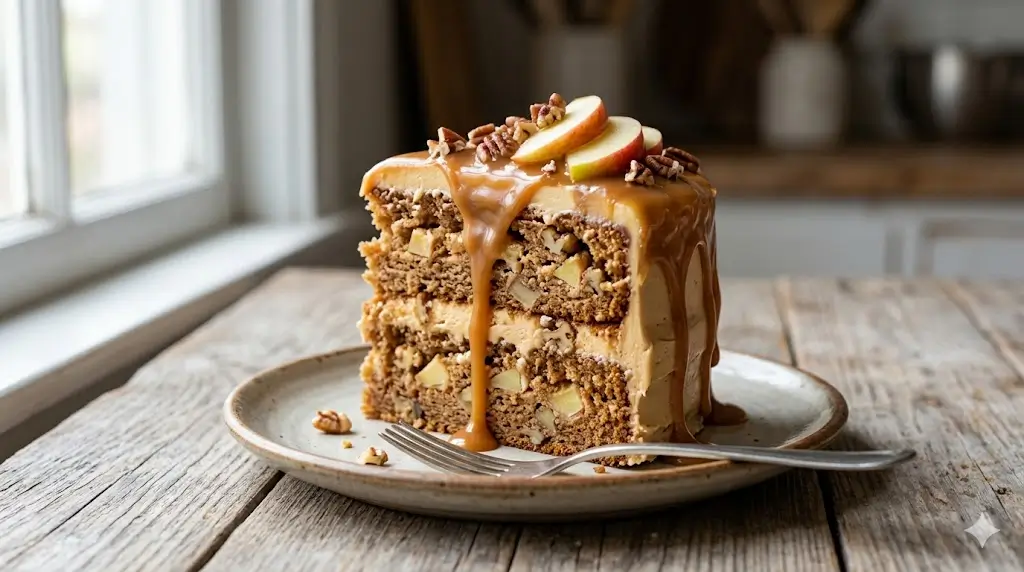
Level your cooled cake layers with a serrated knife. Place the first layer on a serving platter. Spread a layer of the caramel cream cheese frosting over the top, then drizzle a generous tablespoon of the extra salted caramel sauce over the frosting. Place the second layer on top and repeat. Top with the final layer, face-down for a flat top edge. Frost the entire outside of the cake. Drizzle the remaining caramel sauce over the top edge of the cake, allowing it to drip beautifully down the sides.