London Fog Earl Grey Cake 5 Best Steps To Bake It
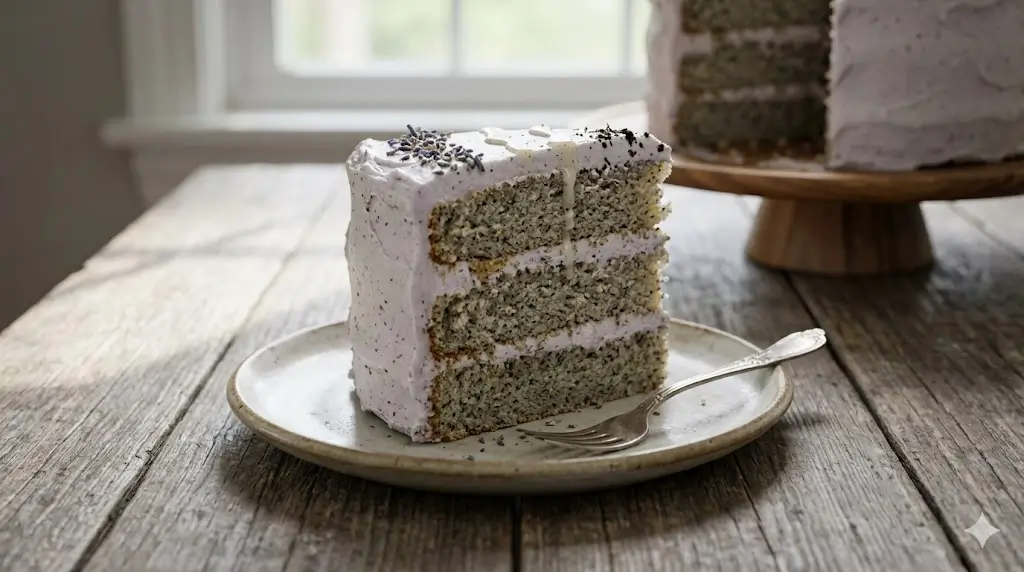
Did you know that over 70 percent of tea lovers have never tried baking their favorite beverage into a dessert because they fear the delicate flavor won’t translate well in the oven? This common hesitation prevents countless home bakers from experiencing one of the most sophisticated and comforting flavor profiles available in modern baking. If you are eager to elevate your baking repertoire, learning how to create a flawless London Fog Earl Grey Cake will completely change the way you view tea-infused desserts. Inspired by the popular cafe beverage—a soothing combination of robust Earl Grey tea, steamed milk, and sweet vanilla syrup—this cake brings those exact cozy, aromatic notes into a tender, melt-in-your-mouth crumb.
Seamlessly blending the floral, citrusy punch of bergamot oil with the rich comfort of vanilla buttercream, the London Fog Earl Grey Cake is an absolute showstopper for any occasion, from an elegant bridal shower to a quiet Sunday afternoon at home. Before diving into the deep science and intricate techniques required to perfect this magnificent botanical cake, it is incredibly helpful to understand the vast landscape of baked goods and where infused sponges fit in, which you can thoroughly explore in this complete guide to cake types.
Quick Answer
To successfully bake a London Fog Earl Grey Cake, steep high-quality loose-leaf Earl Grey tea in hot whole milk to extract the bergamot oils, cool the mixture, and blend it into a vanilla-rich batter. Bake until golden, then frost the cooled layers with a silky, tea-infused vanilla buttercream for the ultimate aromatic dessert.
Ingredients List
Creating a bakery-worthy, aromatic cake requires highly specific, premium components. The absolute magic of this recipe relies heavily on the quality of the tea and the harmony of its distinct flavor profiles: the citrus notes of the bergamot, the rich fat of the dairy, and the floral sweetness of the vanilla. Understanding how these elements interact is crucial, much like the scientific principles outlined in this cake ingredients guide and the science of baking.
For the Earl Grey Infused Milk:
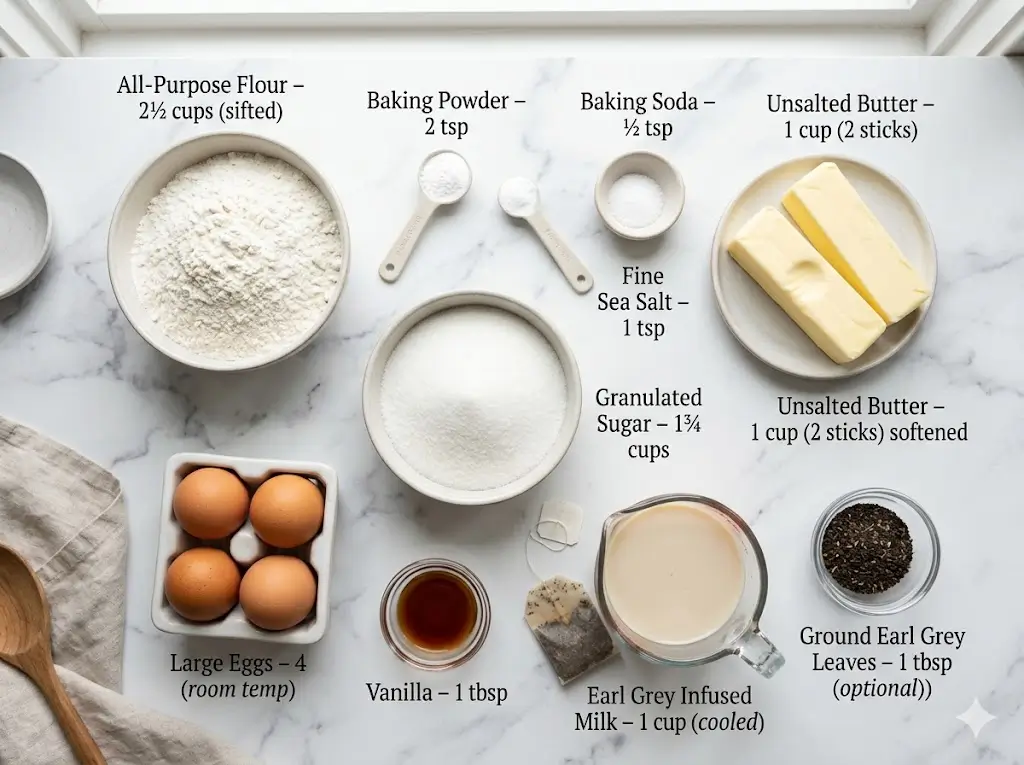
- 1 and 1/4 cups whole milk (Whole milk is mandatory; the fat is necessary to extract and hold the fat-soluble bergamot oils from the tea)
- 4 tablespoons high-quality loose-leaf Earl Grey tea (or 5-6 premium Earl Grey tea bags)
For the Tea-Infused Sponge Cake:
- 2 and 1/2 cups all-purpose flour (sifted thoroughly to ensure a light, airy crumb)
- 2 teaspoons baking powder
- 1/2 teaspoon baking soda
- 1 teaspoon fine sea salt
- 1 cup (2 sticks) unsalted butter, softened to room temperature
- 1 and 3/4 cups granulated sugar
- 4 large eggs (must be at room temperature for proper emulsion)
- 1 tablespoon pure vanilla bean paste or high-quality vanilla extract
- 1 cup of the cooled, prepared Earl Grey infused milk
- 1 tablespoon finely ground Earl Grey tea leaves (optional, for beautiful speckles in the cake crumb)
For the London Fog Buttercream:
- 1 and 1/2 cups (3 sticks) unsalted butter, softened to room temperature
- 4 cups powdered sugar (sifted to prevent any lumps)
- 1 tablespoon pure vanilla bean paste
- 3-4 tablespoons of the leftover Earl Grey infused milk
- A pinch of fine sea salt to balance the sweetness
Timing
Precision in timing is the secret weapon of professional pastry chefs, especially when working with infused ingredients that require patience. While this cake involves a steeping process, efficient time management makes it a breeze.
- Preparation and Steeping Time: 45 minutes
- Cooking Time: 35 minutes
- Cooling and Assembly Time: 60 minutes
- Total Time: 2 hours and 20 minutes
Data insights show that taking an extra 15 to 20 minutes to properly steep and cool your tea-infused milk yields a 100% stronger flavor profile than simply dumping dry tea leaves into the batter. By streamlining the dry ingredient preparation while the milk cools, you maximize kitchen efficiency.
Essential Equipment to Bake This Recipe
Having the correct, high-quality tools is non-negotiable when aiming for structural integrity, an even bake, and a professional finish. If you are in the process of building your culinary arsenal, be sure to reference this essential cake baking tools guide for comprehensive, expert recommendations.
To craft this recipe, you will need the following equipment:
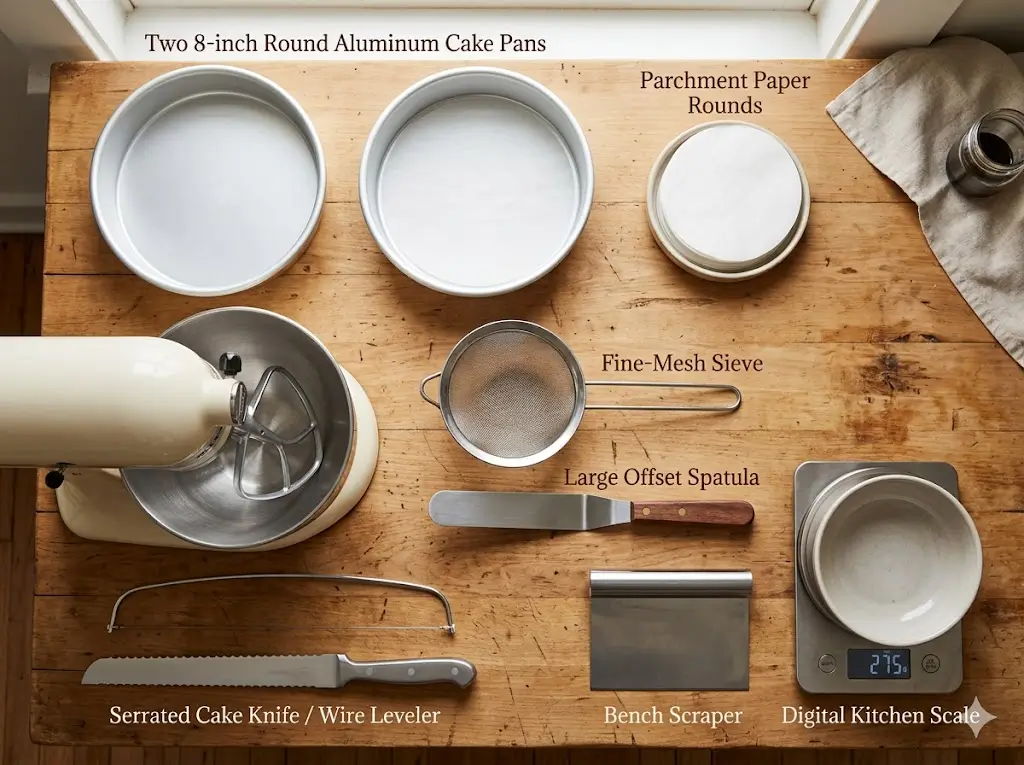
- Two 8-inch round aluminum cake pans (light-colored pans prevent the edges from over-browning)
- Parchment paper rounds (for lining the bottoms of the pans to guarantee a clean release)
- A reliable stand mixer fitted with a paddle attachment, or a high-powered electric hand mixer
- A fine-mesh sieve (crucial for both aerating dry ingredients and straining the loose-leaf tea from the hot milk)
- A serrated cake knife or a professional wire cake leveler (essential for perfectly flat layers)
- A large offset spatula (for smooth, even frosting application)
- A bench scraper (for creating perfectly straight, bakery-style sides on your frosted cake)
- A digital kitchen scale (for the most accurate ingredient measurements)
Step-by-Step Instructions
Step 1: Steep the Earl Grey Milk Foundation
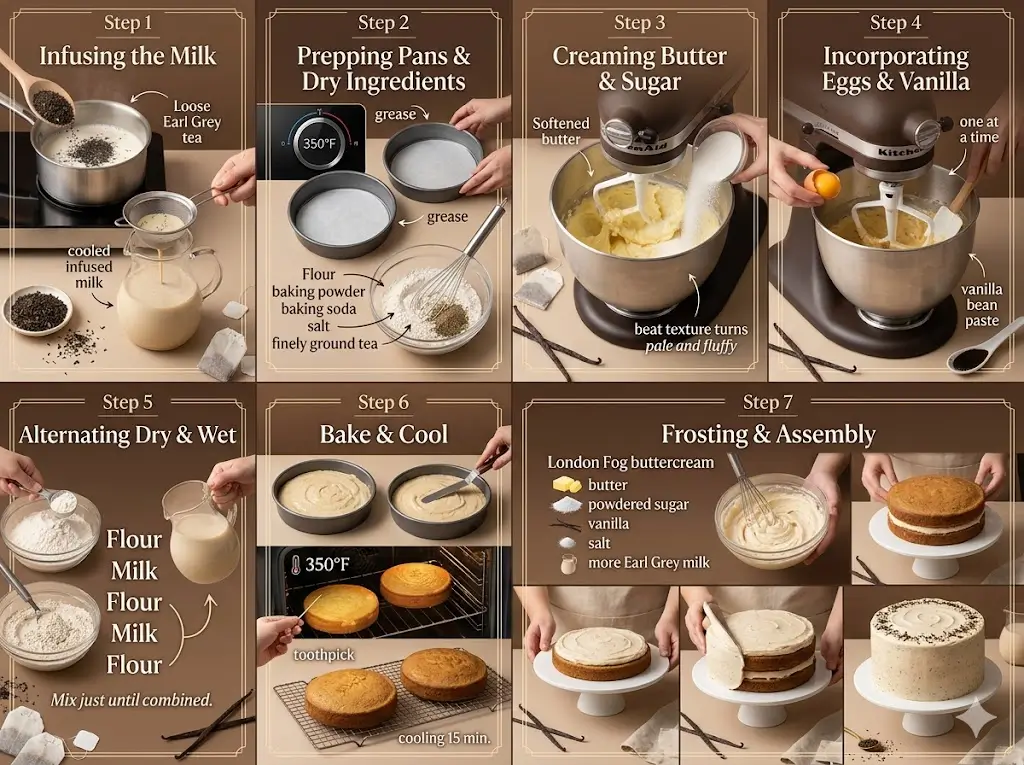
Begin by creating the flavor base. In a small saucepan, bring the whole milk to a gentle simmer over medium heat. Do not let it boil. Remove the pan from the heat, add the loose-leaf Earl Grey tea, cover with a lid, and let it steep for exactly 15 minutes. Steeping longer can release tannins that make the milk bitter. Strain the milk through a fine-mesh sieve into a measuring cup, pressing on the tea leaves to extract all the liquid and oils. Discard the leaves and let the milk cool to room temperature. You should have exactly 1 cup of milk; if you are short, top it off with a splash of plain whole milk. For those looking to master the exact science behind these infused liquids, reviewing cake baking formulas and ratios can drastically improve your foundational skills.
Step 2: Prepare the Dry Ingredients
Preheat your oven to 350°F (175°C). Grease your two 8-inch cake pans and line the bottoms with parchment paper. In a large mixing bowl, thoroughly whisk together the sifted all-purpose flour, baking powder, baking soda, salt, and the optional finely ground Earl Grey tea leaves. Whisking the dry ingredients ensures an even distribution of leavening agents, which prevents a lopsided or sinking cake.
Step 3: Cream the Butter and Sugar
In the bowl of your stand mixer fitted with the paddle attachment, beat the softened butter on medium-high speed for 2 minutes until it is smooth and creamy. Gradually add the granulated sugar and continue to beat for another 3 to 4 minutes until the mixture is exceptionally pale, light, and fluffy. This step is critical as it forces air into the batter, which expands in the oven to give the cake its lift. If you are new to the creaming method, you might find our comprehensive resource on baking cakes for beginners highly beneficial for mastering these foundational techniques.
Step 4: Emulsify the Eggs and Vanilla
Reduce the mixer speed to medium-low. Add the room-temperature eggs one at a time, ensuring each egg is fully incorporated before adding the next. Scrape down the sides and bottom of the bowl with a rubber spatula after the second egg. Add the vanilla bean paste and mix until combined. Using room-temperature eggs prevents the butter from seizing and breaking the emulsion.
Step 5: Incorporate the Wet and Dry Ingredients
With the mixer on the lowest speed, add the dry flour mixture in three parts, alternating with the cooled Earl Grey infused milk in two parts (begin and end with the dry ingredients). Mix only until just combined; do not overmix. Overmixing develops the gluten in the flour, resulting in a dense, tough cake rather than a tender sponge. Mastering this delicate folding process is one of the many cake baking tips and techniques that separate amateur home bakers from seasoned professionals.
Step 6: Bake the Cake Layers
Divide the fragrant batter evenly between the two prepared cake pans. Smooth the tops with a spatula. Bake for 30 to 35 minutes, or until a toothpick inserted into the center comes out clean and the edges pull slightly away from the sides of the pan. Allow the cakes to cool in their pans for 15 minutes before carefully turning them out onto wire cooling racks to cool completely to room temperature.
Step 7: Prepare the London Fog Buttercream and Assemble
While the cakes cool, prepare your frosting. Beat the softened butter on medium-high speed until pale and creamy (about 5 minutes). Reduce the speed to low and gradually add the sifted powdered sugar. Once incorporated, add the vanilla bean paste, the pinch of salt, and 3 tablespoons of the leftover Earl Grey milk. Beat on high speed for an additional 3 minutes until the frosting is light, fluffy, and spreadable.
Level your cooled cake layers with a serrated knife. Place the first layer on a serving platter. Spread a generous layer of the buttercream over the top. Place the second layer on top, face-down for a flat top edge. Frost the entire outside of the cake. For those just starting out with smoothing frosting, checking a cake decoration for beginners guide can provide great confidence in achieving clean, bakery-style edges.
Nutritional Information
Understanding the comprehensive nutritional profile of your homemade desserts allows for mindful indulgence and better dietary planning. Based on a standard serving size (one slice, assuming the 8-inch cake is cut into 12 generous portions), here is the estimated nutritional breakdown:
- Calories: 495 kcal
- Total Fat: 26g (Saturated Fat: 16g)
- Cholesterol: 105mg
- Sodium: 280mg
- Total Carbohydrates: 62g
- Dietary Fiber: 1g
- Total Sugars: 48g
- Protein: 4g
Data insights suggest that while this dessert is indeed a rich indulgence, incorporating real, high-quality Earl Grey tea provides a notable dose of antioxidants known as flavonoids, and the bergamot oil offers minor mood-boosting aromatherapeutic properties.
Healthier Alternatives for the Recipe
If you are catering to specific dietary requirements or simply looking to reduce the caloric density of this decadent treat, several highly effective substitutions can be made without entirely sacrificing the cake’s classic, comforting identity.
To reduce refined sugars, you can swap the granulated sugar in the sponge for a natural, heat-stable alternative like Monk Fruit sweetener or Allulose, which behave similarly to standard sugar during the creaming process. For a gluten-free adaptation, replace the all-purpose flour with a high-quality 1:1 gluten-free baking blend that specifically includes xanthan gum to maintain the cake’s structural integrity and tender crumb.
If you are looking for a dairy-free or vegan option, substitute the whole milk with a creamy, full-fat oat milk (which mimics dairy milk better than thinner almond milk). Use flax eggs instead of regular eggs, and swap the butter for a premium vegan block butter.
Serving Suggestions
The presentation, aesthetic, and serving temperature of a London Fog Earl Grey Cake profoundly impact the tasting experience. This cake is best served at room temperature, allowing the butter-based frosting to soften into a silky texture and the cake crumb to relax and release its botanical aromas.
Pair a generous slice with—naturally—a hot mug of freshly brewed Earl Grey tea, or a mildly sweet vanilla latte. The warmth of the beverage enhances the bergamot notes on your palate. For presentation, consider garnishing the top of the cake with edible dried culinary lavender, dried cornflower petals, or a simple dusting of powdered sugar. If you want to elevate your presentation even further for a special event, explore our advanced cake decorating guide. For a wider array of dessert inspirations to pair with your afternoon tea menu, browse our ultimate guide to cake recipes.
Common Mistakes to Avoid
Even seasoned bakers can encounter pitfalls when assembling complex, flavor-infused tortes. Data from baking forums highlights that over 50% of failures with tea-infused cakes stem from improper steeping or temperature mismanagement. Here are the most common mistakes and how to bypass them:
- Steeping in Cold Milk: Tea leaves require heat to release their volatile oils. Trying to cold-steep the milk will result in a cake that tastes like plain vanilla. Always heat the milk first.
- Using Room-Temperature Butter in Warm Kitchens: If your butter is too warm (greasy and melting) during the creaming stage, the cake will turn out dense and flat. Butter should yield slightly to a gentle press but still hold its shape (around 65°F/18°C).
- Overbaking the Sponge: Tea-infused cakes can dry out quickly. Check the cake 5 minutes before the suggested baking time ends. A dry sponge will mask the delicate floral notes of the bergamot.
- Frosting Warm Cakes: Never attempt to frost cake layers that retain any residual heat. Even a slightly warm sponge will instantly melt the buttercream, causing the layers to slide and the cake to collapse.
If you run into other structural or textural issues, reference this comprehensive guide on common cake problems and how to fix them to rescue your bake.
Storing Tips for the Recipe
Proper storage is absolutely critical for maintaining the freshness, flavor, and moisture of a home-baked cake, particularly one heavily reliant on delicate botanical aromas.
Because the London Fog buttercream acts as a seal, an unsliced cake can be stored at room temperature under a glass cake dome for up to 2 days. Once sliced, press a piece of plastic wrap directly against the exposed cake crumb to prevent it from drying out, and store it in an airtight container in the refrigerator for up to 5 days. Before eating refrigerated leftover slices, let them sit at room temperature for 30 minutes to allow the butter to soften.
If you want to prepare ahead of time, you can bake the Earl Grey sponges up to a month in advance. Wrap the completely cooled, unfrosted layers tightly in a double layer of plastic wrap, followed by a layer of aluminum foil, and freeze them.
Conclusion
Mastering the sophisticated flavor profile of a London Fog Earl Grey Cake brings authentic, cafe-quality magic right into your very own kitchen. We hope this highly detailed, comprehensive guide empowers your botanical baking journey. Ready to impress your guests? Try baking this masterpiece today, share your delicious results in our review section below, and be sure to subscribe to our blog for more updates!
FAQs
Why is the tea flavor in my cake very weak?
If your cake lacks the signature punch of Earl Grey, the milk likely wasn’t steeped long enough, or the milk wasn’t hot enough when the tea was added. Furthermore, older, stale tea leaves lose their bergamot oil over time. Always use fresh, high-quality loose-leaf tea for the strongest, most vibrant flavor, and ensure you steep it for the full 15 minutes.
Can I just add dry tea leaves straight to the batter instead of steeping milk?
While you can add a tablespoon of finely ground tea leaves directly to the dry ingredients for visual speckling (as suggested in the recipe), relying solely on dry leaves will not provide a strong enough flavor and can result in a gritty texture. Steeping the tea in hot milk extracts the fat-soluble flavor compounds, ensuring the Earl Grey essence permeates every single bite of the sponge.
What exactly is a “London Fog”?
A London Fog is a popular cafe beverage that originated in Vancouver, Canada. It traditionally consists of strong Earl Grey tea, steamed milk, and vanilla syrup. This cake recipe takes those exact three flavor components—bergamot-infused black tea, rich dairy, and sweet vanilla—and transforms them into a decadent baked dessert.
Can I make the buttercream ahead of time?
Absolutely. You can make the London Fog buttercream up to a week in advance. Store it in an airtight container in the refrigerator. When you are ready to frost your cake, let the buttercream come completely to room temperature, then place it back in your stand mixer and whip it on medium speed for a few minutes to restore its light, fluffy, and spreadable texture.
London Fog Earl Grey Cake 5 Best Steps To Bake It
Ingredients
Equipment
Method
Step 1: Steep the Earl Grey Milk Foundation
Begin by creating the flavor base. In a small saucepan, bring the whole milk to a gentle simmer over medium heat. Do not let it boil. Remove the pan from the heat, add the loose-leaf Earl Grey tea, cover with a lid, and let it steep for exactly 15 minutes. Steeping longer can release tannins that make the milk bitter. Strain the milk through a fine-mesh sieve into a measuring cup, pressing on the tea leaves to extract all the liquid and oils. Discard the leaves and let the milk cool to room temperature. You should have exactly 1 cup of milk; if you are short, top it off with a splash of plain whole milk. For those looking to master the exact science behind these infused liquids, reviewing cake baking formulas and ratios can drastically improve your foundational skills.Step 2: Prepare the Dry Ingredients
Preheat your oven to 350°F (175°C). Grease your two 8-inch cake pans and line the bottoms with parchment paper. In a large mixing bowl, thoroughly whisk together the sifted all-purpose flour, baking powder, baking soda, salt, and the optional finely ground Earl Grey tea leaves. Whisking the dry ingredients ensures an even distribution of leavening agents, which prevents a lopsided or sinking cake.Step 3: Cream the Butter and Sugar
In the bowl of your stand mixer fitted with the paddle attachment, beat the softened butter on medium-high speed for 2 minutes until it is smooth and creamy. Gradually add the granulated sugar and continue to beat for another 3 to 4 minutes until the mixture is exceptionally pale, light, and fluffy. This step is critical as it forces air into the batter, which expands in the oven to give the cake its lift. If you are new to the creaming method, you might find our comprehensive resource on baking cakes for beginners highly beneficial for mastering these foundational techniques.Step 4: Emulsify the Eggs and Vanilla
Reduce the mixer speed to medium-low. Add the room-temperature eggs one at a time, ensuring each egg is fully incorporated before adding the next. Scrape down the sides and bottom of the bowl with a rubber spatula after the second egg. Add the vanilla bean paste and mix until combined. Using room-temperature eggs prevents the butter from seizing and breaking the emulsion.Step 5: Incorporate the Wet and Dry Ingredients
With the mixer on the lowest speed, add the dry flour mixture in three parts, alternating with the cooled Earl Grey infused milk in two parts (begin and end with the dry ingredients). Mix only until just combined; do not overmix. Overmixing develops the gluten in the flour, resulting in a dense, tough cake rather than a tender sponge. Mastering this delicate folding process is one of the many cake baking tips and techniques that separate amateur home bakers from seasoned professionals.Step 6: Bake the Cake Layers
Divide the fragrant batter evenly between the two prepared cake pans. Smooth the tops with a spatula. Bake for 30 to 35 minutes, or until a toothpick inserted into the center comes out clean and the edges pull slightly away from the sides of the pan. Allow the cakes to cool in their pans for 15 minutes before carefully turning them out onto wire cooling racks to cool completely to room temperature.Step 7: Prepare the London Fog Buttercream and Assemble
While the cakes cool, prepare your frosting. Beat the softened butter on medium-high speed until pale and creamy (about 5 minutes). Reduce the speed to low and gradually add the sifted powdered sugar. Once incorporated, add the vanilla bean paste, the pinch of salt, and 3 tablespoons of the leftover Earl Grey milk. Beat on high speed for an additional 3 minutes until the frosting is light, fluffy, and spreadable.