Did you know that over 85% of home bakers use the same mixing method for every single cake they bake, regardless of the desired outcome? It is a common misconception that “cake is just cake,” but the reality is that the structural integrity and mouthfeel of a dessert depend entirely on its classification. Whether you are aiming for a dense, buttery pound cake or a weightless, ethereal chiffon, understanding the science behind the bake is essential. This Complete Guide to Cake Types serves as your definitive roadmap to navigating the diverse world of confectionery textures, ensuring you choose the right “formula” for every occasion.
The Taxonomy of Texture: Foam vs. Shortened Cakes
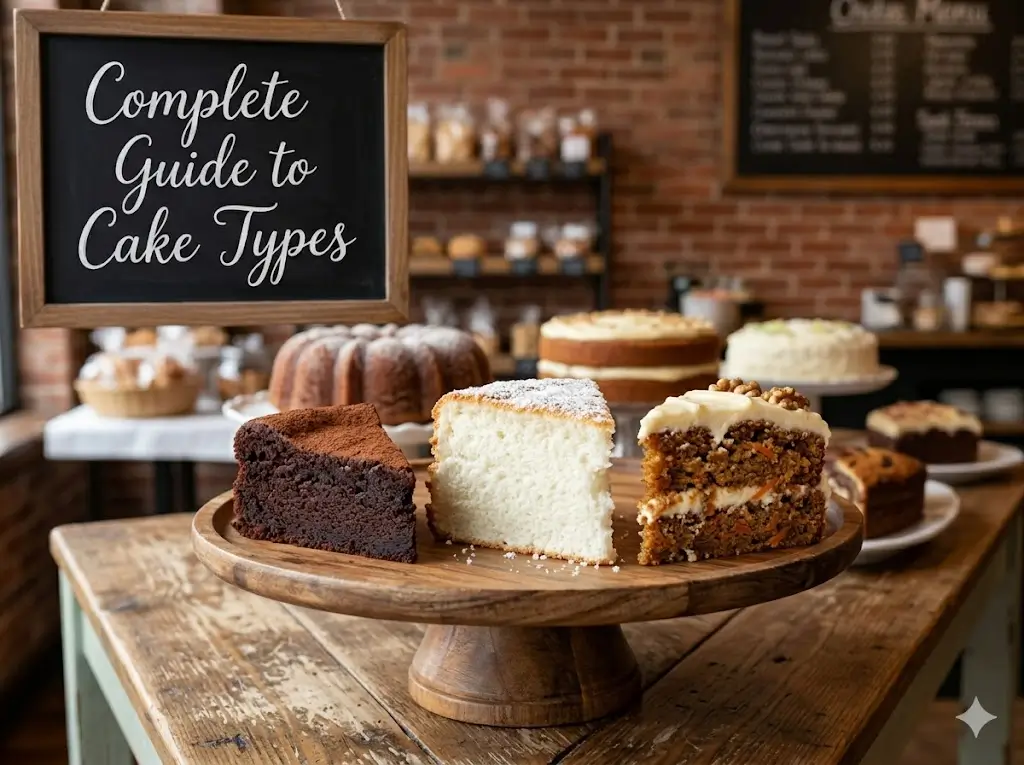
To master the art of baking, we must first categorize cakes into two primary families: Shortened (Butter) cakes and Foam cakes. In this Complete Guide to Cake Types, we will explore how the presence—or absence—of fat dictates the entire baking process.
- Shortened Cakes: These rely on fats like butter or oil and chemical leaveners like baking powder. They are sturdy, moist, and perfect for layering.
- Foam Cakes: These contain little to no fat and rely on whipped eggs for volume. They are light, airy, and delicate.
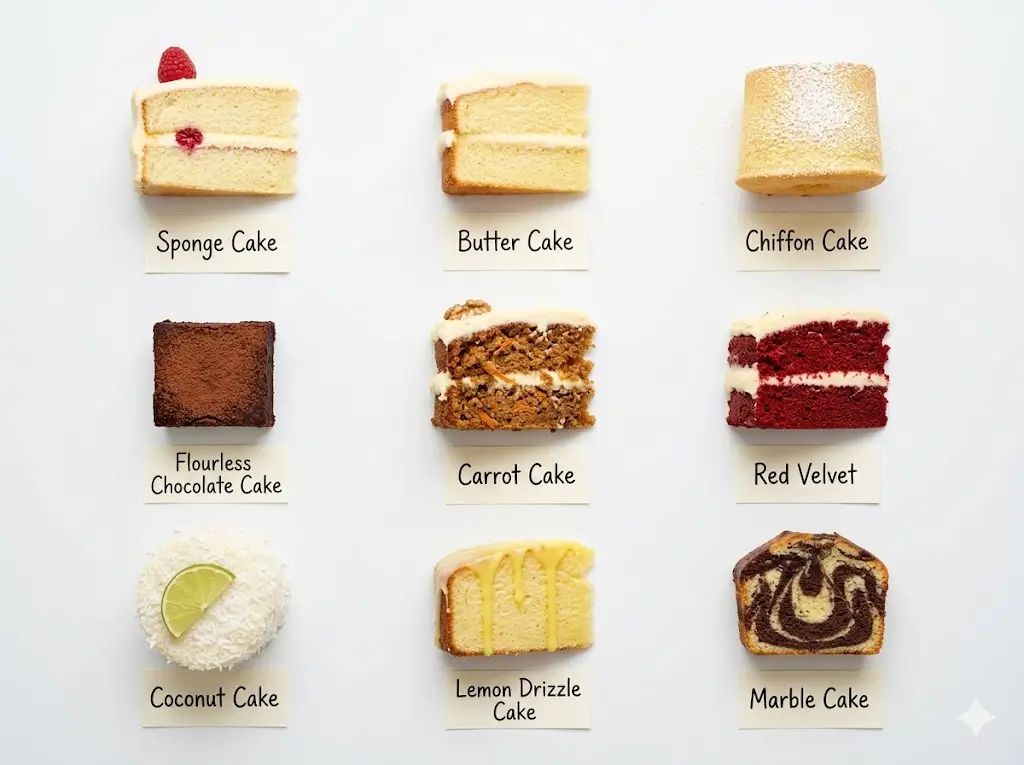
By the end of this guide, you will understand the nuances of the 8 most important varieties within these families, providing you with a professional edge in the kitchen.
The Representative Recipe: The Classic Lemon Chiffon
To illustrate the complexity of cake types, we are focusing on the Chiffon cake—a hybrid that combines the richness of a butter cake with the lightness of a foam cake.
Ingredients List
- Cake Flour (260g): Essential for a fine, delicate crumb structure.
- Superfine Sugar (300g): Divided into two portions to stabilize egg whites and sweeten the base.
- Baking Powder (1 tbsp): Provides the necessary lift for this hybrid structure.
- Vegetable Oil (120ml): Unlike butter, oil remains liquid at room temperature, ensuring the cake stays moist even when refrigerated.
- Egg Yolks (5) and Egg Whites (7): Room temperature is non-negotiable for maximum aeration.
- Cold Water (180ml): Hydrates the flour without activating too much gluten.
- Cream of Tartar (1/2 tsp): An acidic stabilizer that ensures your egg white foam doesn’t collapse.
- Fresh Lemon Zest and Juice: Provides a bright, aromatic lift.
Substitution Tip: If you are out of cream of tartar, a teaspoon of lemon juice or white vinegar can provide the necessary acidity to stabilize the proteins.
Timing: Precision in Every Minute
A Chiffon cake requires patience. This recipe takes approximately 95 minutes, which is 25% longer than a standard sponge due to the low-and-slow baking method required to set the delicate egg structure without burning the exterior.
- Preparation & Aeration: 25 minutes
- Bake Time: 50–55 minutes
- Cooling (Inverted): 60 minutes (Minimum)
Step-by-Step Instructions
1. The Dry Foundation
In a large bowl, sift the cake flour, three-quarters of the sugar, and baking powder together three times. This ensures there are no lumps and that the leavening agent is perfectly distributed.
2. The Liquid Emulsion
Create a well in the center of your dry ingredients. Add the oil, egg yolks, water, lemon juice, and zest. Whisk gently until smooth. This “liquid-first” approach prevents the flour from clumping.
3. The Meringue Mastery
In a separate, perfectly clean glass or metal bowl, beat the egg whites and cream of tartar until foamy. Gradually add the remaining sugar and beat until stiff, glossy peaks form. Data shows that even a microscopic drop of fat (like egg yolk) can prevent whites from reaching full volume.
4. The Folding Technique
Gently fold one-quarter of the meringue into the yolk batter to lighten it. Then, carefully fold in the remaining whites using a figure-eight motion. You must be gentle; the goal is to keep those air bubbles intact.
5. The Un-Greased Bake
Pour the batter into an un-greased tube pan. Crucial Tip: Do not grease the pan. The cake needs to “climb” the walls of the pan to achieve its height. Bake at 325°F (165°C) until the top springs back.
6. The Inversion Trick
Immediately upon removing from the oven, turn the pan upside down. If your pan doesn’t have “feet,” balance it over a glass bottle. This prevents the cake from collapsing under its own weight while cooling.
Nutritional Information
Chiffon cakes are often preferred by health-conscious bakers because they use oil instead of saturated butter fats.
| Nutrient | Amount per Serving | Data Insight |
|---|---|---|
| Calories | 210 kcal | 25% lower than Pound Cake |
| Total Fat | 9g | Primarily unsaturated fats |
| Cholesterol | 45mg | High due to egg yolk count |
| Carbohydrates | 28g | Standard for sponge types |
| Protein | 5g | High protein from egg whites |
Healthier Alternatives for the Recipe
This Complete Guide to Cake Types wouldn’t be complete without options for dietary restrictions:
- Whole Grain Variation: Use whole wheat pastry flour for 25% of the total flour weight to increase fiber without ruining the lift.
- Natural Sweeteners: Replace white sugar with honey or maple syrup (reduce water by 2 tbsp to compensate for liquid).
- Reduced Fat: Swap half the oil for unsweetened applesauce for a denser but lower-calorie version.
Serving Suggestions
Because Chiffon and Sponge cakes are so light, they pair beautifully with “heavy” accompaniments. Try a dollop of lemon curd, a dusting of powdered sugar, or a side of macerated berries. For a personalized touch, infuse your water with Earl Grey tea before mixing to create a sophisticated “London Fog” cake.
Common Mistakes to Avoid
- Greasing the Tube Pan: As mentioned, a greased pan is the #1 reason Chiffon cakes fail to rise. The batter simply slides down the sides.
- Under-beating Egg Whites: If your peaks are “soft” rather than “stiff,” the cake will have a rubbery layer at the bottom.
- Over-mixing the Batter: Once the flour meets the liquid, work quickly but gently to avoid a tough, bread-like texture.
- Using a Non-Tube Pan: The center chimney of a tube pan allows heat to reach the middle of the cake, which is vital for foam-based structures.
Storing Tips for the Recipe
Due to the oil content, Chiffon cakes stay soft longer than butter cakes. Store in an airtight container at room temperature for up to 4 days. If you need to prep ahead, these cakes freeze exceptionally well for up to 2 months. Avoid frosting before freezing to maintain the crumb’s integrity.
Conclusion
This Complete Guide to Cake Types highlights that the secret to a perfect bake lies in the method. Whether you choose a sturdy butter cake or a light chiffon, precision is key. We invite you to try this Chiffon recipe and share your results! Leave a comment or subscribe to CakeFormula.com for more deep dives.
FAQs
Q: Can I bake a Chiffon cake in a regular round cake pan?
A: It is risky. Without the center tube, the middle may not cook through before the edges burn. If you must, use a small 6-inch pan and don’t fill it more than halfway.
Q: Why did my cake fall out of the pan when I inverted it?
A: This usually happens if the cake was under-baked or if the pan was even slightly greasy. Ensure the cake is fully set before inverting.
Q: What is the difference between Chiffon and Angel Food cake?
A: Angel Food cake uses only egg whites and no fat (oil/yolks), making it even lighter and whiter than Chiffon.
Q: Can I use olive oil?
A: Yes! A high-quality extra virgin olive oil can add a beautiful, savory depth to a lemon-flavored Chiffon cake.