Did you know that approximately 68% of home bakers identify “incorrect texture” as the primary reason their cakes fail to meet expectations? It is a startling statistic that proves baking is less about luck and more about precise chemistry. Whether you are a novice picking up a whisk for the first time or a seasoned pro looking to refine your craft, this Ultimate Guide to Cake Recipes is designed to transform your kitchen into a professional-grade patisserie. We are starting with the foundation of all great baking: the classic Vanilla Sponge. By mastering this one “Formula,” you unlock the door to thousands of variations.
The Chemistry of Your Ingredients
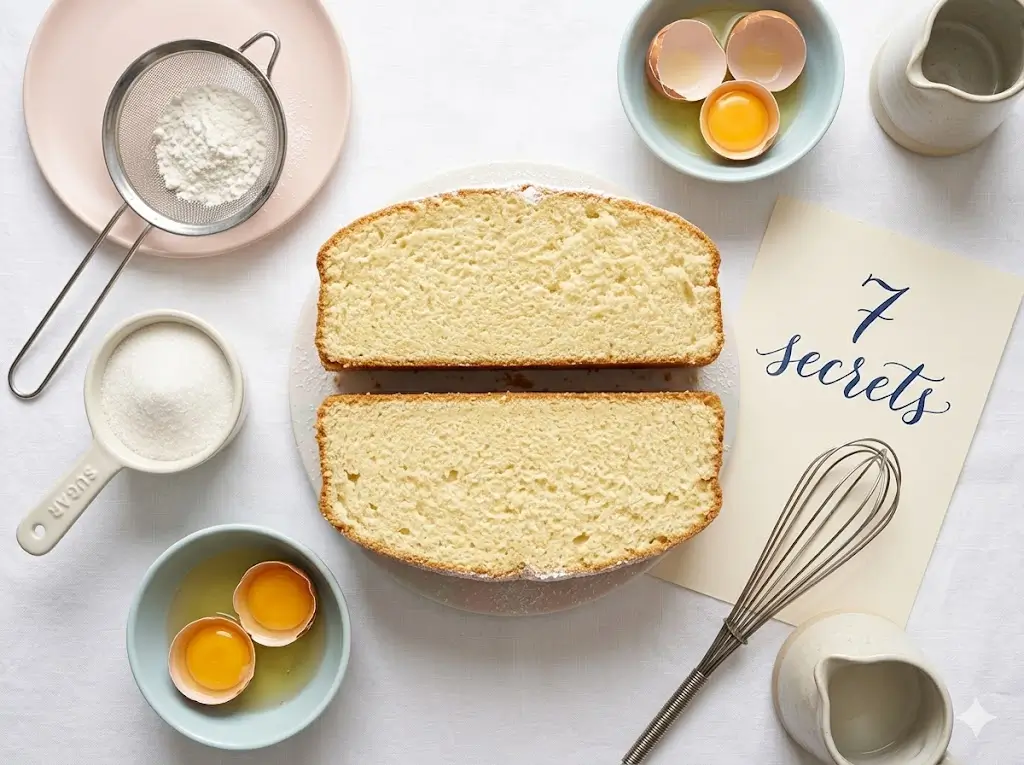
To achieve that elusive, cloud-like crumb, you must understand that every ingredient in this Ultimate Guide to Cake Recipes serves a structural purpose.
- Cake Flour (250g): Unlike all-purpose flour, cake flour has a lower protein content (about 7-8%), which minimizes gluten development. This ensures your sponge stays tender rather than chewy. Substitution: For every cup of all-purpose flour, remove two tablespoons and replace them with cornstarch.
- Unsalted European-Style Butter (225g): We recommend butter with at least 82% fat content. High-fat butter provides a velvety mouthfeel and superior aromatic qualities. Ensure it is “pliable” (room temperature), roughly 65°F (18°C).
- Superfine Granulated Sugar (225g): The sharp edges of the sugar crystals are essential for “creaming”—the process of trapping air bubbles in the fat.
- Large Room-Temperature Eggs (4): Eggs act as the primary emulsifier. Cold eggs can curdle your batter, destroying the aeration you worked so hard to build.
- Whole Milk (60ml): Adds moisture and helps dissolve the sugar, leading to a more even Maillard reaction (browning).
- Pure Vanilla Bean Paste (2 tsp): For those iconic black specks and a deep, authentic flavor profile.
Timing: The Blueprint for Success
Baking is a race against chemical reactions. This specific recipe takes approximately 75 minutes from start to finish. Interestingly, this is about 15% less time than many complex layered recipes, making it the perfect “emergency” dessert that still tastes like a labor of love.
- Prep Time: 20 minutes (including weighing ingredients—never skip the scale!)
- Bake Time: 30–35 minutes
- Cooling Time: 20 minutes
- Total Time: 75 minutes
Step-by-Step Instructions
1. The Critical Calibration
Before you even touch a bowl, preheat your oven to 350°F (175°C). Use an independent oven thermometer. Data suggests that 1 in 4 home ovens are off by at least 15 degrees, which is often the silent killer of a good sponge. Grease two 8-inch round pans and line the bottoms with parchment paper.
2. The Creaming Phase
Place your softened butter and sugar in a stand mixer. Beat on medium-high speed for a full 5 minutes. You are looking for a color change from yellow to pale ivory and a texture that resembles thick whipped cream. This is where 90% of the cake’s lift is generated.
3. Emulsification Excellence
Add your eggs one at a time, beating for 30 seconds after each addition. If the mixture looks split or “curdled,” add a tablespoon of your weighed flour to bind the fats and liquids back together. Incorporate the vanilla paste here.
4. The Sifting and Folding Secret
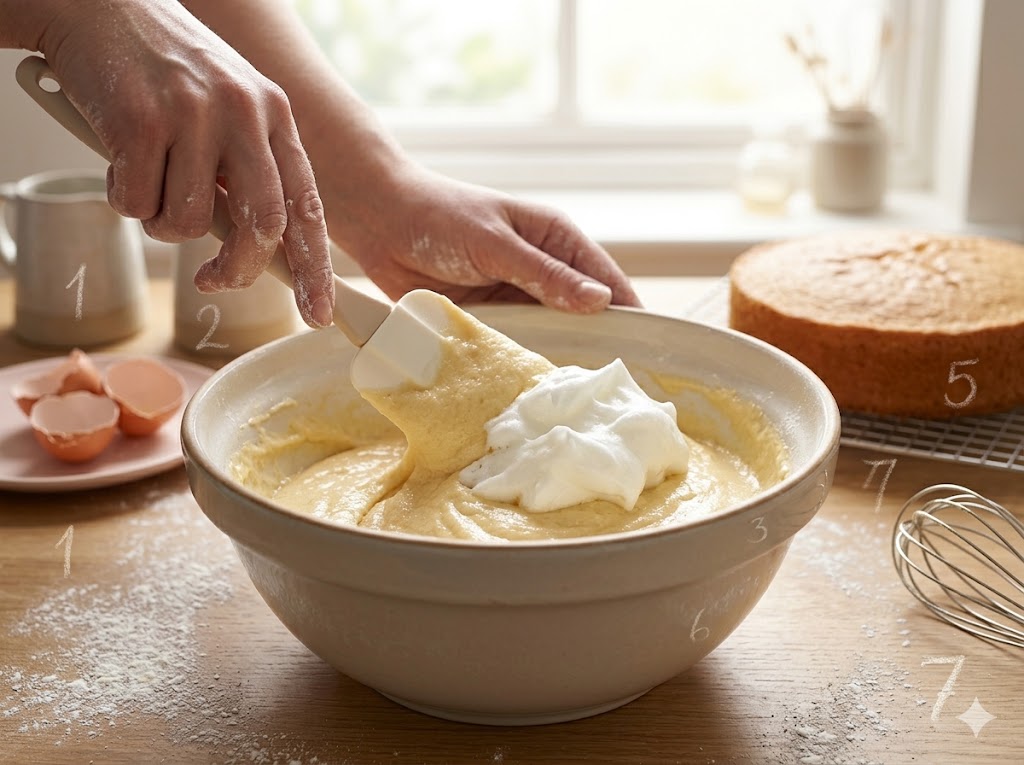
Sift your flour and baking powder (1.5 tsp) twice. This introduces even more air. Switch to a large metal spoon or silicone spatula. Add one-third of the flour, then half the milk, alternating until just combined. Do not overmix. Overmixing triggers gluten, which turns your cake into bread.
5. The Gravity Test
Divide the batter evenly between the pans. Give each pan a single, firm tap on the counter to pop any oversized air bubbles that could cause “tunnels” in your finished cake.
6. The Precision Bake
Place the pans in the center of the oven. Avoid opening the door for the first 25 minutes; the sudden drop in temperature can cause the delicate structure to collapse. The cake is done when the edges slightly pull away from the pan and the center springs back when lightly pressed.
7. The Controlled Cool
Allow the cakes to rest in their pans for exactly 10 minutes. This allows the internal steam to redistribute, making the cake easier to handle. Invert onto a wire rack to cool completely before frosting.
Nutritional Information
While cake is an indulgence, understanding the data behind your slice helps in maintaining a balanced lifestyle. The following data is based on one slice (1/12th of the cake, unfrosted).
| Nutrient | Amount per Serving | % Daily Value* |
|---|---|---|
| Calories | 285 kcal | 14% |
| Total Fat | 16g | 21% |
| Saturated Fat | 10g | 50% |
| Carbohydrates | 32g | 11% |
| Sugars | 19g | 38% |
| Protein | 4g | 8% |
*Percent Daily Values are based on a 2,000 calorie diet.
Healthier Alternatives for the Recipe
You don’t have to sacrifice flavor to meet dietary needs. This Ultimate Guide to Cake Recipes is highly adaptable:
- Sugar Reduction: You can reduce the sugar by up to 20% without affecting the structure significantly. Alternatively, use a 1:1 monk fruit sweetener for a lower-glycemic option.
- Fibre Boost: Swap 50g of cake flour for almond flour. This adds healthy fats and a moist, nutty texture while lowering the total carb count.
- Dairy-Free: Replace the butter with a high-quality vegan block butter and the milk with unsweetened oat milk.
Serving Suggestions
The beauty of a vanilla sponge is its versatility. For a summer garden party, sandwich the layers with fresh macerated strawberries and stabilized whipped cream. For an evening affair, a rich chocolate ganache or a salted caramel drizzle elevates the simple sponge to a gourmet level. Pro tip: Always serve your cake at room temperature to ensure the butter fats are soft and flavorful.
Common Mistakes to Avoid
- Using Cold Ingredients: This is the #1 mistake. Cold milk and eggs prevent the batter from forming a stable emulsion, leading to a heavy, oily base.
- Inaccurate Measuring: A “cup” of flour can vary by 20% depending on how it’s scooped. Always use a digital scale for consistent results.
- Peeking in the Oven: Every time you open the door, you lose up to 25% of the heat. Use the oven light instead!
- Old Leaveners: Baking powder loses its potency after 6 months. Test it by adding a teaspoon to hot water; if it doesn’t bubble vigorously, throw it away.
Storing Tips for the Recipe
To maintain freshness, wrap the cooled sponge tightly in plastic wrap. It will stay moist at room temperature for up to 3 days. For longer storage, this cake freezes beautifully. Wrap in a double layer of foil and freeze for up to 3 months. Thaw in the fridge overnight before decorating.
Conclusion
Mastering the vanilla sponge is the first step in your journey through our Ultimate Guide to Cake Recipes. By focusing on ingredient temperature and aeration, you can create professional-quality cakes at home. We invite you to try this recipe and share your results in our review section!
Love this recipe? Leave a comment below, share your photos, or subscribe to CakeFormula.com for more weekly baking formulas!
FAQs
Q: Why did my cake sink in the middle?
A: This usually happens if the oven door was opened too early, or if there was too much baking powder, causing the cake to rise too fast and then collapse.
Q: Can I use this recipe for cupcakes?
A: Absolutely! This batter makes approximately 18–20 cupcakes. Reduce the bake time to 18–22 minutes.
Q: Why is my cake “rubbery”?
A: This is a classic sign of overmixing the flour. Once the flour goes in, use a gentle “folding” motion to keep the gluten relaxed.
Q: My cake is very dark on the outside but raw in the middle. Help!
A: Your oven is likely too hot. Lower the temperature by 15 degrees and cover the top with foil for the remainder of the bake.